A Mysterious Signal from Empty Space: James Webb Detects an Unexplained Burst
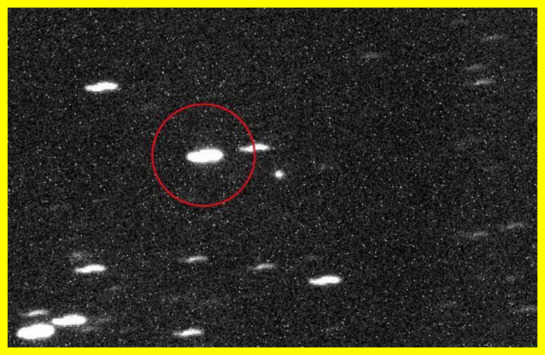
A strange signal has emerged from one of the most meticulously studied patches of the universe, leaving astronomers completely baffled. The James Webb Space Telescope detected an unusual flash of light in a region where no known celestial object exists to explain it.
What makes the finding even more perplexing is that the signal appeared in two separate sets of observations taken 88 days apart. Despite relentless analysis of this deep-space zone, scientists have found no trace of the object responsible for the emission.
The anomaly hints at a captivating scenario: something hidden from our view released a intense burst of energy and then vanished back into the shadows. This was reported by ScienceAlert, citing a study published by The Astrophysical Journal.
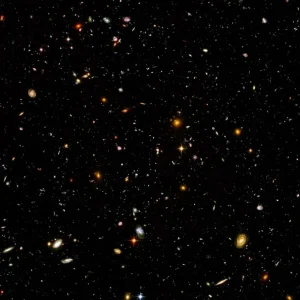
A Flash Where Nothing Should Be
The signal was located within the Hubble Ultra Deep Field, a tiny region in the constellation Fornax. The Hubble telescope previously spent over 270 hours mapping this area, uncovering nearly 10,000 galaxies spanning billions of light-years.
When the James Webb Space Telescope turned its powerful infrared instruments toward the same spot, researchers expected deeper clarity. A team led by astrophysicist Mason Huberty at the University of Minnesota utilized Webb’s Near-Infrared Spectrograph, opening nearly all of its microshatters to hunt for hidden light sources.
While the data confirmed six signals linked to known distant galaxies, a seventh detection stood alone as a genuine enigma. It manifested as a solitary, vivid emission line at a wavelength of 1.6 micrometers. Crucially, the secondary signals typically expected alongside such an emission were entirely missing.
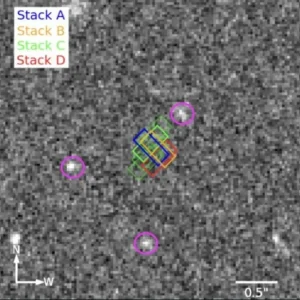
The team confirmed the signal across multiple exposures and viewing angles in August and November 2023, effectively ruling out a basic hardware glitch. Strangely, the burst was strong enough that it ought to have shown up in Webb’s earlier October 2022 dataset—yet those images showed nothing.
Astrophysicists are weighing several hypotheses, from a distant faint galaxy or a nearby transient event to a supernova or a star torn apart by a black hole. However, none of these models fit the data cleanly.
Without additional spectral fingerprints, researchers cannot measure the object’s distance or determine what physical process triggered the light. For now, the origin of the signal remains a cosmic mystery—a stark reminder that even the most thoroughly mapped corners of space still hold profound secrets.
VIDEO. The deepest image of the Universe ever taken | Hubble.
It was previously reported that a new study by scientists warns that a solar superstorm similar to the one that occurred in 1859 could trigger a “power outage arc” across 22 states and leave 5 million Americans without power.