Meteorite that crashed through a New Jersey home contains rare amino acids
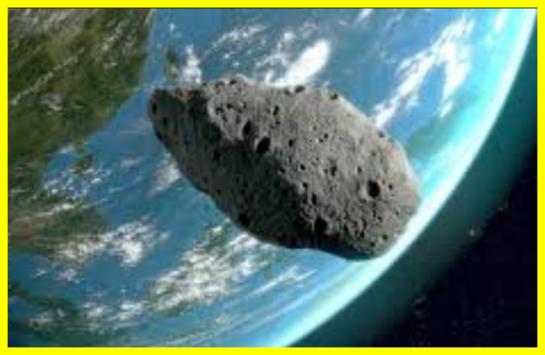
A meteorite that crashed through the roof of a home in New Jersey has given scientists new clues about the origins of life. Researchers found rare amino acids and evidence that the space rock once interacted with ancient salt water. The discovery could improve our understanding of how organic compounds reached the early Earth.
The study was published in the scientific journal Science Advances. Scientists believe the meteorite preserves material from the earliest history of the Solar System.
The object entered Earth’s atmosphere on July 16, 2024. People across New York City and parts of New Jersey reported seeing a bright fireball. Many also heard a powerful sonic boom as the meteorite broke apart.
Researchers estimate the original object weighed about 53 kilograms (117 pounds). It traveled at nearly 14 kilometers per second (8.7 miles per second). The explosion released energy equal to about 1.3 tons of TNT.
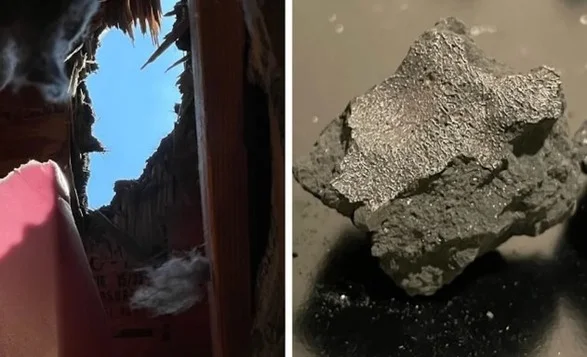
One surviving fragment weighed 1.35 kilograms (3 pounds). It crashed through the roof of a house in Hillsborough and landed inside a bedroom. No one was injured during the incident.
The homeowner carefully collected the fragments while wearing protective gloves. The pieces were wrapped in aluminum foil and placed inside clean glass containers. This simple step helped prevent contamination from Earth’s environment.
Laboratory analysis identified the object as a CM2 carbonaceous chondrite. This rare type of meteorite contains carbon-rich material that formed more than 4.5 billion years ago. Such meteorites are considered some of the oldest objects in the Solar System.
Video: The fireball recorded over New York and New Jersey on July 16, 2024, before a surviving meteorite fragment struck a home in Hillsborough, New Jersey.
Scientists found rare amino acids inside the meteorite
Scientists discovered several amino acids inside the meteorite. Some of these compounds are rarely found on Earth. Amino acids are the basic building blocks of proteins. They are essential for every known form of life.
Researchers also detected unusually high levels of sodium. This suggests that the parent asteroid once contained extremely salty water, known as brine. Chemical reactions inside this environment may have produced complex organic molecules.
Scientists believe the parent asteroid formed beyond the orbit of Jupiter. The cold outer Solar System contained large amounts of ice, minerals, and organic material. Some of these bodies later moved toward the inner planets.
Many researchers think carbon-rich meteorites delivered water and organic compounds to the young Earth. Repeated impacts may have supplied important ingredients for prebiotic chemistry. These materials existed long before the first living organisms appeared.
The discovery of amino acids does not prove extraterrestrial life. These molecules can form naturally without living organisms. Even so, the meteorite provides valuable evidence that the chemical ingredients for life existed throughout the early Solar System.
Scientists will continue examining the meteorite using advanced laboratory techniques. They hope to learn more about its chemical history and the role that water played inside its parent asteroid. The results may help explain how the building blocks of life spread across the Solar System billions of years ago.
It was previously reported that, for the first time in history, a meteorite was allegedly shot down by air defense systems in the skies over China’s Shandong province. Video footage of the shootdown was posted on social media.