CHILLING study: 1859-style solar storm could blackout 22 states
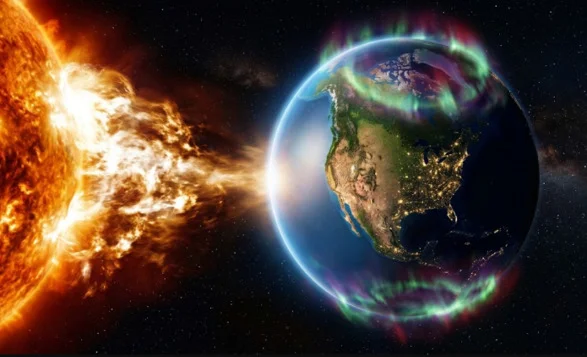
In late summer 1859, the skies above Earth erupted in brilliant crimson auroras. History records this event as the Carrington Event. Telegraph lines sparked uncontrollably. They shocked operators and set paper on fire.
A colossal solar storm slammed into our planet. For over a century, that event was remembered merely as a Victorian anomaly. It was seen as a bizarre moment when pre-industrial technology buckled under the sun’s wrath. Source: AGU Advances Scientific Study.
Today, a disturbing question haunts space weather scientists. What happens when that historical ghost finally returns to a world completely addicted to electricity?
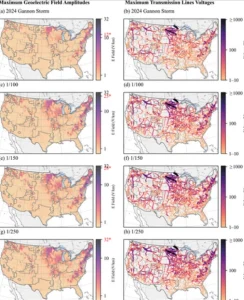
A new scientific model reveals a alarming scenario. A modern superstorm of Carrington-level intensity occurs roughly once every 250 years. It could trigger a dark domino effect across America. The solar pulse will not strike randomly. Instead, it threatens to carve a continuous, sinister “Blackout Arc” straight through 22 interconnected US states. Over five million citizens could be trapped in total darkness.
The true mystery lies in how this invisible threat strikes. The primary danger does not come from solar flares scorching power lines from above. Instead, violent solar shockwaves distort Earth’s magnetic shield. They induce powerful, unseen electrical currents deep within the soil beneath our feet.
These subterranean voltage surges sneak into high-voltage transmission networks from below. They quickly overload critical infrastructure. High-voltage transformers face the greatest peril. These custom-built machinery monsters can take months or years to manufacture and replace if wiped out simultaneously.
A Hidden Threat Frozen in Geological History
Geological conditions dictate where the mystery deepens. Ground currents do not flow evenly across continents. Local rock formations and soil conductivity determine which regions act as lightning rods for geomagnetic fury.
This geographic vulnerability was proven in 1989. A miniature solar storm unexpectedly plunged the entire province of Quebec into darkness within seconds.
Yet the newly modeled 22-state arc represents a far greater catastrophe. It threatens over 135,000 businesses. It promises an economic loss of $1.8 billion for every single day the grid remains dead.
Modern satellites actively watch the sun’s surface for incoming coronal mass ejections. Still, humanity remains in a tense race against time. The mystery is no longer whether another superstorm will strike. The real question is whether our fragile power grids can survive these invisible subterranean currents when the solar nightmare of 1859 repeats itself.
VIDEO. The Carrington Event of 1859. The Truth About the Solar Superstorm That Nearly Destroyed Civilization.
It was previously reported that scientists and politicians from Europe and the United States are exploring solar geoengineering, which could reflect sunlight and cool the planet. This controversial idea proposes intentionally reducing the amount of sunlight reaching Earth to slow global warming.