Trump blames Canada for wildfire smoke
US President Donald Trump has accused Canada of contributing to severe air pollution in the United States. He said poor forest management has allowed massive Canadian wildfires to produce huge amounts of smoke that drift across the border.
Writing on his Truth Social platform, Trump said the smoke has created “polluted and unhealthy air” in several US states. He argued that millions of Americans have been forced to breathe unhealthy air because the fires were not managed properly.
Trump said he plans to discuss the issue with the Canadian prime minister. He described the situation as “willful negligence.”
According to Trump, wildfire smoke costs the United States billions of dollars every year. He also suggested that these costs should be considered when setting future tariffs on Canadian goods.
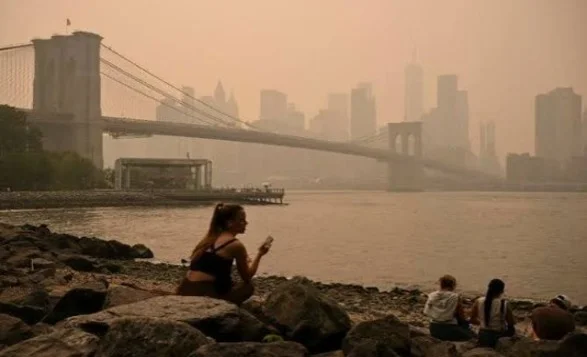
His comments came as smoke from large Canadian wildfires continued to reduce air quality across parts of the northeastern United States. Several cities experienced hazy skies and poor visibility. Air pollution levels also increased significantly.
Smoke from Canadian wildfires has crossed the US border many times during recent fire seasons. Strong winds can carry smoke hundreds or even thousands of kilometers from the fire zones.
Health agencies have issued air quality alerts in several states. Levels of fine particulate matter, known as PM2.5, have reached unhealthy levels in some areas.
Officials advised residents to stay indoors whenever possible. They also recommended keeping windows closed and using air filtration systems.
Several cities reported sharply reduced visibility. Thick smoke covered skylines and turned the sky gray or orange. Images quickly spread across social media. Many users compared the scenes with some of the world’s most polluted cities.
Wildfire smoke contains microscopic particles that can travel deep into the lungs. Some particles may even enter the bloodstream.
Doctors warn that smoke exposure can worsen asthma, heart disease, and other respiratory illnesses. Children, older adults, and people with chronic health conditions face the greatest risk.
Researchers say breathing dense wildfire smoke for long periods may seriously affect human health. Some studies suggest that heavy exposure can be comparable to inhaling harmful substances from several cigarettes per day. The actual risk depends on smoke levels, exposure time, and a person’s overall health.
Climate researchers say drought, extreme heat, and strong winds have increased the intensity of wildfire seasons in Canada. Once major fires begin, they can continue burning for weeks or even months. During that time, enormous smoke plumes can spread across North America.
Canadian and American authorities continue monitoring the fires with satellites, weather models, and air quality stations. Officials urge people to follow local health advice until conditions improve.
Experts believe wildfire smoke will remain a major environmental challenge. The debate over forest management, climate change, and cross-border pollution is also expected to continue in both Canada and the United States.