Scientists Test Plan to Refreeze the Arctic
Every year the Arctic loses more of its summer ice, and scientists fear the process is accelerating. Satellite observations show the region has already lost around 40% of its summer Arctic sea ice over the past four decades.
To slow the trend, researchers launched an unusual field experiment. At first glance, it sounds more like science fiction than climate science.
Instead of simply watching the ice disappear, they decided to see if it could be rebuilt.
The project was led by the organization Real Ice with support from the UK government. The idea was simple. Pump seawater onto the surface during the Arctic winter and let nature do the rest. Once the water froze, it would create a thicker layer of ice that might survive longer into the warmer months.
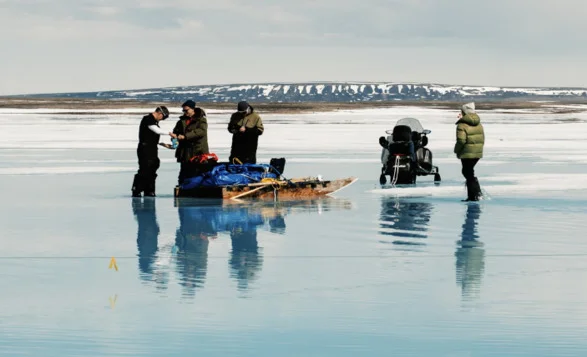
The experiment took place about 6.5 kilometers from the Inuit community of Cambridge Bay in northern Canada. During January and February, engineers drilled holes through the existing ice and pumped nearly 50,000 tons of seawater onto the frozen surface.
The freezing temperatures did the rest. The water turned to ice almost immediately. By the end of the project, researchers had increased the ice thickness by about 50 centimeters across an area measuring roughly 450 by 450 meters.
The pumping equipment operated for more than 1,000 hours. The work was demanding. Researchers wanted to learn whether geoengineering could become another tool for protecting vulnerable parts of the Arctic during summer.
Can Artificially Thickened Ice Slow Arctic Melting?
The project was about more than simply making thicker ice. Scientists carefully monitored temperature, salt content and the internal structure of every new layer. Measurements were taken every two centimeters. The goal was to compare the artificial ice with naturally formed sea ice.
One question interested the team more than anything else. Would the new ice reflect sunlight as effectively as natural ice?
That difference is important. Bright ice reflects around 70% of incoming solar energy back into space. Open ocean reflects only about 7%. As more ice disappears, darker seawater absorbs extra heat. The warmer ocean then melts even more ice.
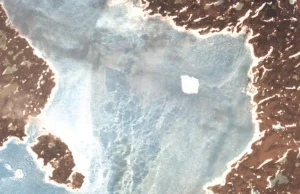
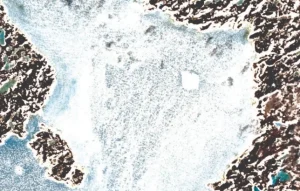
When spring arrived, satellite images revealed something unexpected. The experimental site appeared as a bright white patch surrounded by darker water. According to the researchers, the artificially thickened ice reflected sunlight even better than the surrounding natural ice.
Satellite images of Cambridge Bay before and after the work.
The results are encouraging. Even so, scientists stress that this was only a small experiment. Nobody knows whether the same approach could work across much larger areas of the Arctic. The long-term impact on marine ecosystems also remains unclear.
Scaling the technology would be a major engineering challenge. Using people and conventional pumps across millions of square kilometers is simply unrealistic. Because of that, scientists are already exploring autonomous underwater vehicles and robotic pumping systems. They hope those machines could perform much of the work in the future.
Many climate experts stress that projects like this cannot replace cutting greenhouse gas emissions. However, they believe experimental technologies could eventually become another tool for slowing the loss of Arctic sea ice if global warming continues.
For now, the Real Ice experiment offers something researchers rarely see. It suggests that damaged sea ice might one day be rebuilt instead of simply disappearing year after year.
Source: Real Ice Project The Guardian
We previously reported on a mysterious “cold spot” in the North Atlantic that has puzzled scientists. New research suggests it could signal dangerous climate change on the planet.
