Prehistoric Cave in Israel Reveals Early Human “Time Capsule”
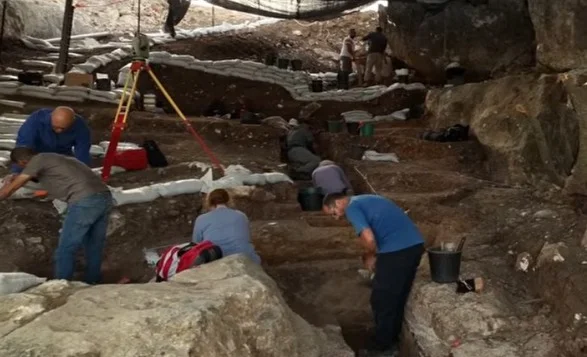
Large-scale archaeological excavations in northern Israel have started at a prehistoric cave site. Scientists already call it a true “time capsule”. The discovery is important for understanding early human evolution and ancient hunter-gatherer life.
The site preserves traces of human activity from about 400,000 to 250,000 years ago. This period belongs to the Lower Paleolithic era, when early humans were adapting to new environments and improving survival skills.
The cave is located near the town of Fureidis, south of Haifa in northern Israel. It is linked to the Acheulean-Yabrud culture of the Levant. This cultural phase belongs to the late Lower Paleolithic archaeology in the region.
Such sites are extremely rare. Most have been damaged over time or are difficult to excavate. This makes the discovery very valuable for studying prehistoric human behavior.
Early results already show a detailed picture of life in the cave. Scientists found bones of fallow deer, gazelles, and ancient horses. These remains point to active hunting and a rich natural environment.
Researchers also found signs of early water use. Prehistoric people may have carried or stored water. This would have been essential for survival in changing climates.
Stone tools made from flint were also discovered. The tools show advanced techniques for that time. They were likely used for hunting and food processing.
Video Israel Antiquities Authority Official Channel.
The site is older than the spread of Neanderthals in the region. It also predates the appearance of direct ancestors of modern humans.
Scientists hope the excavation will reveal more about early social behavior. They are also studying how knowledge was shared between generations.
Evidence from similar caves suggests early use of fire. It also shows that tool-making skills were passed down over time.
This prehistoric cave in Israel gives a rare chance to study early human life in detail. It helps researchers understand how ancient communities survived and evolved in the Levant.
Source: The Jerusalem Post
It was previously reported that French archaeologists discovered about 100 dinosaur eggs dating back approximately 72 million years. They remained hidden for a very long time. Most of them are about the size of a melon.