Ancient Sahara Tombs May Be Older Than Egyptian Pyramids
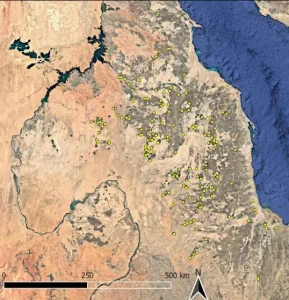
In eastern Sudan’s Nubian Desert, archaeologists have uncovered more than 260 ancient stone tombs scattered across the Sahara.
What makes the discovery especially interesting is that some of these structures may actually predate the Egyptian pyramids, pushing the timeline of complex societies in this region much further back than expected.
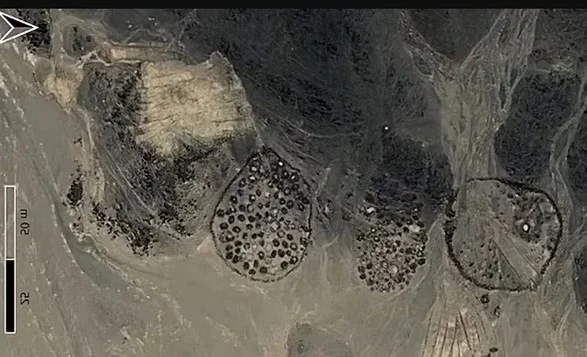
The discovery didn’t begin in the desert itself. It started with satellite images, where researchers noticed faint circular formations spread across a wide area of sand and rock. At first, these shapes didn’t seem significant, but the repetition and pattern suggested something artificial rather than natural.
When archaeologists later investigated the sites on the ground, they confirmed that these were large stone burial enclosures. Some of them are massive, reaching up to 80 meters in diameter, which points to organized construction rather than isolated graves.
According to dating evidence, the structures were built between 4000 and 3000 BC, a period that comes well before the rise of Ancient Egypt’s pharaonic civilization.
During that time, the Sahara was not the dry desert we see today. It was a much greener environment, with lakes, rivers, and grasslands that supported both humans and animals. Nomadic groups could move through the region and rely on seasonal water sources.
What was found inside the tombs
Inside several of the burial sites, archaeologists discovered human remains together with bones of domesticated animals such as cattle, goats, and sheep. The arrangement of these remains is not random, and in many cases there is a clear structure.
A central burial is often surrounded by smaller graves, which may indicate differences in status or roles within the group. This suggests that even these early nomadic communities may have had some form of social hierarchy.
Most of the tombs are located near ancient water sources like dried lakes and old river channels. This detail is important, as access to water would have been essential for survival in this environment.
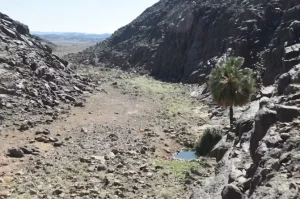
As the African Humid Period came to an end, rainfall gradually decreased and the Sahara began to dry out. Over time, lakes disappeared and vegetation became scarce, making life increasingly difficult for pastoral communities.
Researchers believe that many of these groups eventually moved toward the Nile Valley, where water remained more stable and conditions were better suited for long-term settlement and development.
Today, these stone circles remain as silent evidence of a forgotten culture that existed thousands of years before Ancient Egypt reached its peak. They also show how much of the Sahara’s history is still buried beneath the sand.