More dangerous than the Titanic: deadly secrets and unique artifacts of the Andrea Doria wreck
Seventy years after the Andrea Doria sank in the Atlantic, divers still risk their lives exploring its remains. The Italian liner has become one of the world’s most notorious shipwrecks. It continues to attract experienced divers searching for historic artifacts and forgotten clues.
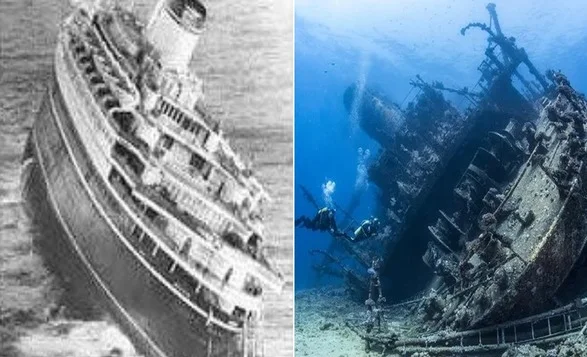
The luxury Italian liner sank in July 1956 after colliding with the Swedish liner Stockholm in heavy fog. The disaster claimed 51 lives. Most passengers survived because the Andrea Doria remained afloat for almost eleven hours.
That delay gave rescue crews enough time to evacuate many passengers. The liner eventually settled about 75 meters below the surface. Its depth soon made the wreck extremely challenging for underwater explorers.
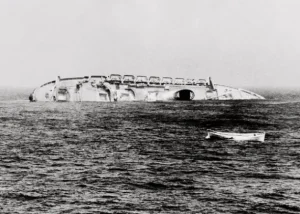
Experienced divers have nicknamed the Andrea Doria wreck the “Everest of scuba diving.” Strong currents and cold water create serious dangers. Poor visibility can make navigation inside the wreck extremely difficult.
VIDEO. The Story Of The Andrea Doria.
The interior presents even greater challenges. Divers encounter collapsed corridors, sharp metal, loose cables and thick sediment. A single movement can stir the sediment and destroy visibility.
Seven decades underwater have also changed the ship dramatically. Large sections have collapsed under the pressure of the marine environment. Parts of the bow and stern have deteriorated significantly.
However, the destruction has created unexpected opportunities. Collapsed sections have opened rooms once protected behind steel bulkheads. These areas may contain Andrea Doria artifacts that have remained hidden for decades.
The search for Andrea Doria artifacts
The Andrea Doria treasure hunt began shortly after the liner disappeared beneath the Atlantic. Divers have recovered many objects from the wreck over the decades.
VIDEO. Diving The Andrea Doria with DV Tenacious.
Among the discoveries were a bronze statue of an admiral and the ship’s fog horn. Divers also recovered a large safe. It contained far less money than many treasure hunters had expected.
Modern technology has made deep exploration somewhat more manageable. Helium-based breathing mixtures allow divers to work at depth for longer periods. Careful decompression remains essential after every dive.
In 2025, American divers Chris Ogden and Joe Masraani recovered a large gyrocompass. The navigation instrument came from the captain’s bridge.
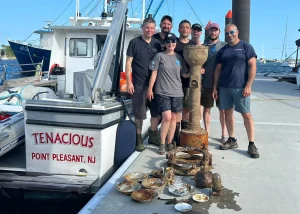
The device was buried beneath fishing nets, cables and metal debris. The divers cleared the area before attaching a special lifting bag. They then carefully moved the heavy instrument toward the surface.
The discovery produced an unexpected twist several weeks later. The upper section of the gyrocompass was missing from the recovered instrument.
It turned out that diver Al Giddings had recovered that section in 1968. He reportedly kept it in his living room for more than fifty years.
Sadly, Masraani later died while exploring another wreck near Cape Cod. His death added to the long list of divers who have died exploring the Andrea Doria.
Who should control the recovered artifacts?
The recovery of Andrea Doria artifacts remains controversial among divers, historians and marine archaeologists. Archaeologists prefer keeping historic objects at the wreck whenever possible.
The location of an artifact can provide important information about the disaster. Its position may reveal how passengers moved during the sinking. It can also help researchers reconstruct events inside the ship.
Salvage divers offer a different argument. They say the wreck is rapidly collapsing. Corrosion and ocean currents could eventually destroy artifacts that survived for decades.
Some recovered objects have already been restored and displayed publicly. Veteran diver John Mayer holds salvage rights to the wreck. He has donated several important discoveries to museums.
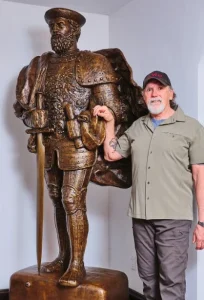
His donations include a deck chair and a 140-pound brass bell. Another donated item was a life jacket belonging to a young passenger.
The Andrea Doria wreck continues to deteriorate on the North Atlantic seabed. Yet its dangerous interior may still contain undiscovered artifacts.
That possibility keeps experienced divers returning to the site. Every expedition carries serious risks. However, each dive could reveal another forgotten piece of the liner’s history.
The Andrea Doria remains both a historic shipwreck and an underwater mystery. Its deteriorating remains continue to attract divers despite the deadly risks surrounding the site.
Sources: Popular Mechanics — information about the Andrea Doria wreck, dangerous dives and recovered artifacts. The Daily Galaxy — information about divers, the wreck’s history, deaths and artifact recovery.
It was previously reported that the sunken ship of the legendary pirate king Henry Every may have been found more than 300 years later. The remains of the historic vessel were found in shark-infested waters off the coast of the Bahamas.