Ancient Mayan City Minanbe Discovered Deep in the Mexican Jungle
An intact ancient Mayan city has been discovered in southern Mexico. It lies deep inside the Calakmul Biosphere Reserve. The site stayed hidden under dense jungle for over a thousand years, untouched and forgotten.
Archaeologists describe the find as extremely rare. There are no clear signs of looting or major destruction. This makes Minanbe especially important for studying Mayan civilization and pre-Columbian archaeology in detail.
The city was named Minanbe, which means “no way in” in the Mayan language. The name fits the location perfectly. Thick vegetation and difficult terrain made access almost impossible for centuries.
The discovery is part of a long-term research program in the Central Mayan Lowlands. This region is known for dense clusters of ancient settlements. Many of them are still hidden beneath the forest.
The breakthrough came when researchers used LiDAR scanning technology. It can detect structures hidden under vegetation without cutting the forest. The scan revealed a large urban complex beneath the canopy.
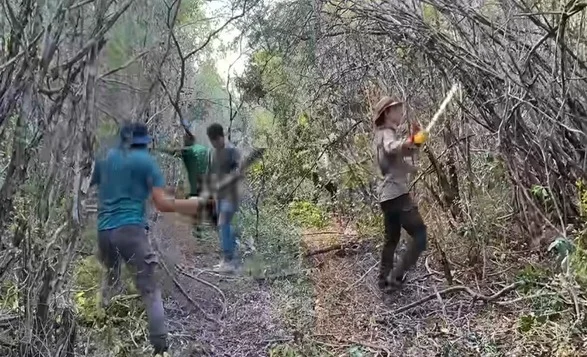
The mapped zone covers roughly fifteen hectares. After confirming the data, scientists organized a ground expedition. The journey to the site was slow and physically demanding due to jungle conditions.
Reaching the ruins required walking through thick forest for several kilometers. The team had to move carefully through unstable terrain. Visibility was extremely low in many sections.
Inside the site, archaeologists found a well-organized urban layout. Two main plazas were identified in the center of the city. Around them were palace buildings and religious structures.
The settlement also included an ancient water management system. Terraced areas suggest controlled agriculture and land use. This indicates a highly developed and structured Mayan city.
Discovery of a new Mayan archaeological settlement: Minanbé, in Campeche. Video YouTube channel INAH TV.
Temples, pyramids and stone monuments of Minanbe
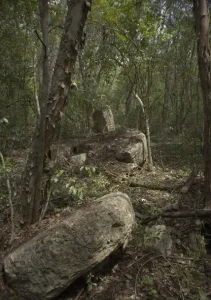
One of the most impressive structures is a pyramid temple over thirteen meters high. It is still partially preserved despite centuries of exposure. The monument shows advanced construction techniques.
Researchers also documented fourteen carved stone stelae. These monuments contain hieroglyphic writing and detailed imagery. Some inscriptions remain undeciphered and require further study.
One stele depicts a ritual scene involving the execution of a captive. The image suggests strong links between power, religion, and warfare. It offers insight into the social structure of the city.
Experts believe Minanbe could change what we know about Mayan settlement patterns. The site is unusually well preserved compared to most discoveries. It may help reconstruct forgotten parts of regional history.
The discovery also shows how important LiDAR technology has become in archaeology. Entire cities can remain hidden under forest for centuries. More sites like this may still exist in the region.
Source of information: National Institute of Anthropology and History of Mexico.
It was previously reported that Britain’s famous Sherwood Forest had lost one of its most famous ancient trees. Robin Hood’s legendary oak tree, it was revealed, had died after more than 1,200 years of life.