The Latest Findings Raise New Questions About d’Artagnan’s Remains
Researchers in the Netherlands have completed another stage of studying a skeleton discovered beneath a historic church in Maastricht. The findings have brought them closer to an answer, but the identity of the man remains uncertain.
Scientists say they cannot confirm that the remains belong to Charles de Batz de Castelmore, better known as d’Artagnan. However, they also cannot rule out that possibility. Several discoveries continue to match historical records surprisingly well.
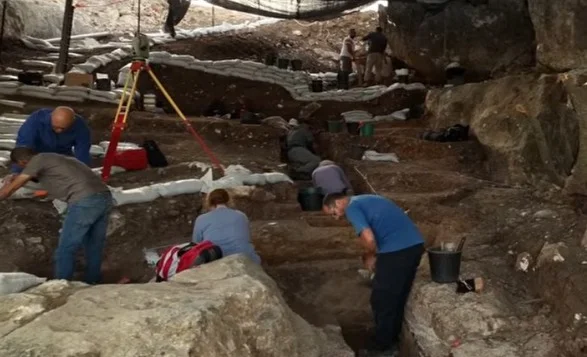
The research was carried out by specialists from Saxion University of Applied Sciences and the BAAC archaeological bureau. Their work combined archaeology, forensic anthropology and laboratory testing to examine the centuries-old remains.
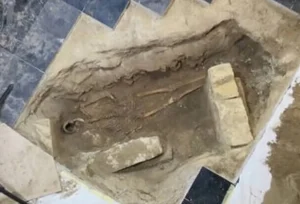
The investigation began with an important obstacle. Earlier excavations inside the church had disturbed the burial site. Bones from different individuals became mixed together, making identification much more difficult.
When archaeologists returned to the grave in March 2026, only part of the original skeleton remained. That limited the amount of material available for detailed examination.
Despite these problems, researchers recovered valuable information. The skeleton belonged to a man about 174 centimeters tall. Experts estimate he died between the ages of 44 and 66.
Historical sources state that d’Artagnan died in 1673 at the age of 62. He was killed during the Siege of Maastricht while serving in the French army.
Radiocarbon dating showed that the bones came from a period between 1500 and 1900. That range includes the year of d’Artagnan’s death. While the result is not precise, it does not contradict the historical timeline.
Why Scientists Still Cannot Confirm the Identity of the Skeleton
Researchers also discovered tiny metal fragments inside the chest. Laboratory analysis suggests they are pieces of a musket projectile. Historical accounts describe the famous musketeer as dying from enemy fire during battle.
The location of the grave also attracted attention. The remains were buried beneath the church’s historic altar. During the seventeenth century, this area was usually reserved for nobles, respected military officers or important religious figures.
Another interesting discovery was a French coin found near the skeleton. On its own, the coin proves nothing. Even so, it adds another detail that fits the historical background.
Scientists also examined chemical signatures preserved inside the bones, and the results suggest the man regularly ate seafood during his lifetime.
At first, that finding appeared unusual because d’Artagnan was born in Gascony, an inland region of France. Researchers believe the result is still possible because he later spent many years in Paris, Lille and other northern cities where seafood was widely available.
For that reason, experts say the dietary evidence neither confirms nor rejects the current theory. They believe the most important stage of the investigation is still ahead.
The next step will involve extracting ancient DNA from the remains. If enough genetic material survives, scientists hope to determine the man’s geographic ancestry and compare it with historical records.
Researchers may also compare the DNA with living descendants believed to belong to the de Batz de Castelmore family. Such a comparison could provide the strongest evidence yet.
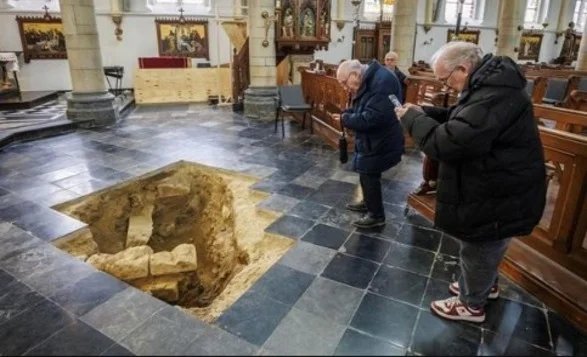
The skeleton was discovered in February 2026 after part of the church floor collapsed during restoration work in Maastricht. The discovery quickly attracted worldwide attention because the famous musketeer died during the siege of the same city more than 350 years ago.
For now, the mystery remains unsolved. Scientists say more laboratory work is needed before they can identify the man with confidence. Until then, the skeleton will remain one of the most intriguing archaeological discoveries in the Netherlands.
Official source: Municipality of Maastricht – Excavations at the church of Wolder: further research needed to identify skeleton.
It was previously reported that, according to experts, the remains of d’Artagnan discovered may remain unidentified. This could be due to serious archaeological errors during the excavations in Maastricht.