US approves testing of space mirror satellite designed to reflect sunlight back to Earth at night
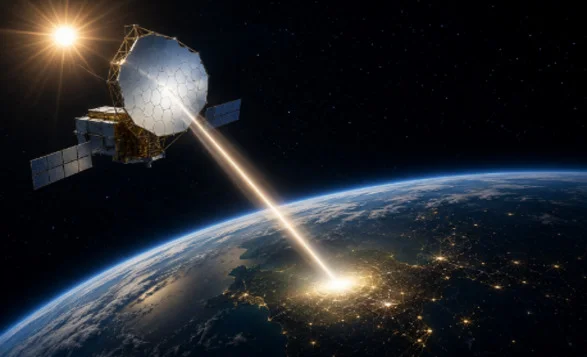
The United States has approved the first real-world test of an unusual space technology. The project could make selected areas of the Earth brighter after sunset. The Federal Communications Commission (FCC) has authorized California startup Reflect Orbital to test its experimental Earendil-1 satellite. Its mission is to reflect sunlight from orbit onto the Earth’s surface.
According to the company, the technology could provide temporary nighttime illumination without using conventional electric lighting. Developers believe it may help farmers extend working hours during harvest. The system could also support renewable energy projects, construction sites, emergency response teams, and disaster relief operations in remote locations.
Unlike ordinary satellites, Earendil-1 will carry a large reflective mirror instead of cameras or communication equipment. The mirror will constantly adjust its position while orbiting the planet. Engineers estimate the reflected light could cover an area of about five square kilometers. The illuminated zone would gradually move as the satellite travels across the sky.
Reflect Orbital has ambitious plans for the future. The company hopes to launch a constellation of more than 50,000 space mirror satellites by 2035. If the project succeeds, it could deliver short periods of additional sunlight almost anywhere on Earth.
Not everyone is convinced the idea is beneficial. Astronomers have warned that additional artificial light could interfere with scientific observations. Even short reflections may affect powerful telescopes. They could also make it harder to detect distant galaxies, comets, asteroids, and potentially hazardous near-Earth objects.
Video. Startup wants to launch mirrors up into space to light up the dark side of Earth.
Scientists are also concerned about the environment. Many animals rely on natural darkness to survive. Birds use it during migration. Sea turtles depend on it when nesting. Insects and nocturnal mammals also follow natural light cycles. Extra illumination at night could disrupt these behaviors.
Researchers say people may also experience unwanted effects. Bright light after sunset can disturb circadian rhythms. It may reduce sleep quality and affect the body’s production of melatonin, the hormone responsible for regulating the sleep cycle.
Transportation experts have raised another issue. Large orbital mirrors could occasionally create bright flashes while changing position. Reflect Orbital says the satellite will be carefully controlled. Even so, aviation specialists believe the technology should undergo extensive safety testing before it is widely deployed.
The debate is not new. Similar concerns appeared when SpaceX began launching thousands of Starlink satellites. Soon afterward, astronomers reported bright streaks crossing telescope images. Some observations became much more difficult. Faint celestial objects were especially hard to detect.
Several studies published in Nature Astronomy have warned that satellite light pollution could continue to increase. Computer models suggest the darkest regions of the night sky may become noticeably brighter during the next decade. Even a small increase would reduce the visibility of faint stars and galaxies.
Supporters of the project argue that orbital mirrors could become useful during natural disasters, humanitarian emergencies, and search-and-rescue missions. Temporary illumination could help rescue teams work after sunset without building expensive ground infrastructure. The technology may also benefit isolated communities with limited access to electricity.
Despite the potential advantages, many experts believe projects like Earendil-1 require international oversight. The number of commercial satellites continues to grow every year.
New constellations are being developed for communications, Earth observation, artificial intelligence, and future space energy systems. Scientists say technological progress should be balanced with the protection of astronomy, the orbital environment, and Earth’s ecosystems.
Sources: Federal Communications Commission (FCC): Earendil-1 authorization. American Astronomical Society (AAS): Statement on Reflect Orbital’s Earendil-1 mission.
It was previously reported that NASA scientists have begun preparations for an unusual space rescue mission. A 1974 Stargazer aircraft will be used to rescue the Swift telescope from falling to Earth.