Two words in a forgotten flight log reveal a terrifying secret about the Hiroshima bombing
For decades, scientists believed they had studied almost every detail of the atomic bombing of Hiroshima. Yet a new study has revealed that an important piece of evidence remained overlooked for 80 years.
A tiny handwritten entry in an American bomber’s flight log has now helped researchers take a fresh look at one of the most extraordinary events in nuclear history: the only documented nuclear firestorm. Science Alert reports this.
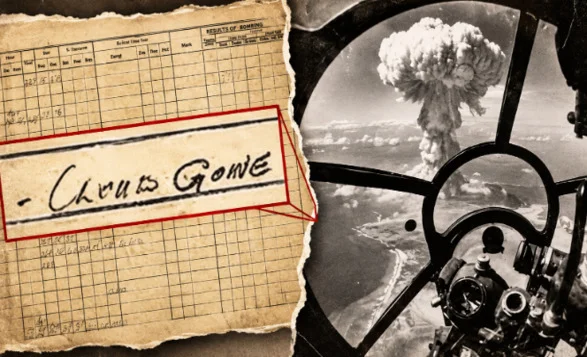
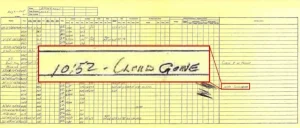
The discovery began with two seemingly insignificant words: “CLOUD GONE.” They were written by Theodore Van Kirk, navigator aboard the American B-29 bomber Enola Gay. He recorded the observation just 97 minutes after the atomic bomb exploded over Hiroshima on August 6, 1945. .
The Enola Gay had dropped its atomic bomb, known as Little Boy, at 8:15 a.m. The explosion devastated Hiroshima, while the enormous fires that followed created powerful upward air currents. Smoke, ash and soot were carried high above the destroyed city, forming a massive plume.
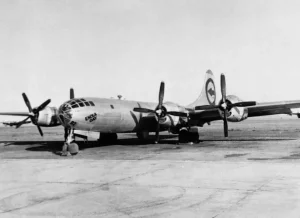
Two words that changed the scientific understanding of Hiroshima’s firestorm
When Van Kirk wrote “CLOUD GONE” at 10:52 a.m., the aircraft was already approximately 750 to 764 kilometers (466 to 475 miles) away. It was flying at an altitude of around 7,440 meters (24,409 feet). For decades, the brief entry attracted little attention. Researchers had no reason to suspect that these two words could reveal anything new about the bombing.
However, atmospheric scientists led by David Romps from the University of California, Berkeley, examined the historical records again. They focused on a crucial question: why had the cloud disappeared from the crew’s view?
The answer was not that the enormous plume had vanished. Instead, atmospheric haze had obscured it from the distant aircraft. This distinction became the key to estimating how high the firestorm’s cloud had actually risen.
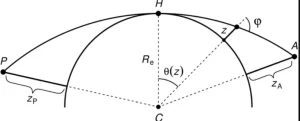
The researchers reconstructed the atmospheric conditions using historical weather models. They also ran 100,000 simulations to account for uncertainties in the aircraft’s position, altitude and visibility. Their calculations indicated that the plume reached at least 11.3 kilometers (7 miles) above the ground.
This finding is important because the height of a firestorm plume determines how far its soot can travel into the atmosphere. Particles reaching sufficiently high altitudes can remain suspended for months or even years. They may reduce the amount of sunlight reaching Earth’s surface and contribute to global cooling.
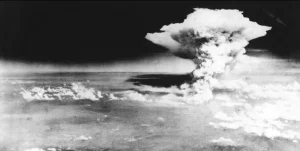
Such effects are central to the scientific concept of nuclear winter. A large-scale nuclear war could produce multiple enormous firestorms, sending vast quantities of soot into the atmosphere. The resulting climate disruption could threaten agriculture, food supplies and millions of lives.
The Hiroshima bombing did not cause a nuclear winter. However, its extraordinary firestorm provides scientists with a rare historical case for studying how nuclear explosions can affect the atmosphere.
What makes the discovery remarkable is that the clue had been hiding in plain sight. A two-word observation, written by a navigator during a historic mission, has now helped researchers understand the enormous atmospheric reach of the Hiroshima firestorm.
VIDEO. Hiroshima minute by minute (UNCENSORED)
It was previously reported that scientists had discovered a previously unknown alloy formed as a result of the atomic bombing of Hiroshima. The study focused on the tiny glassy particles formed under the extreme conditions of the 1945 explosion.