NASA’s Curiosity and Perseverance rovers continue to find unusual geological formations on Mars
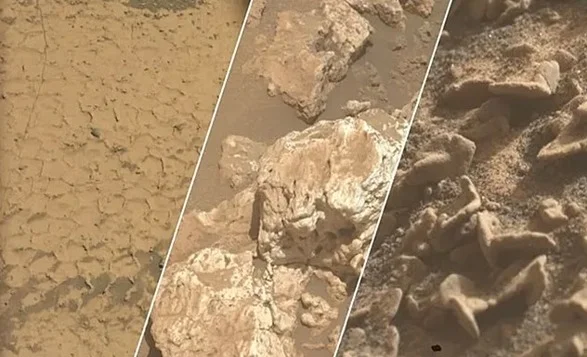
The Curiosity and Perseverance rovers continue to discover unusual geological formations on Mars. Some resemble potato chips, others are almost white, and still others form regular polygons.
NASA released new images of these discoveries and explained what they reveal about the history of the Red Planet. Some formations may have been formed by water, and certain minerals may preserve traces of ancient microscopic life.
The Curiosity rover recently completed drilling in an area researchers have dubbed Nazca. There, the rover studied unusual flat formations embedded in the surrounding rock. Some of them are so thin and smooth that NASA specialists compared them to potato chips.
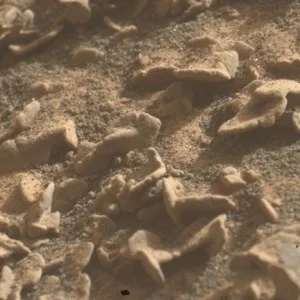
On November 7, 2026, the 5067th Martian day of operation, Curiosity captured detailed images using the MAHLI camera mounted on the end of its robotic arm.
The spacecraft also analyzed the chemical composition of the rocks using the ChemCam instrument and transmitted the samples collected during drilling to the onboard SAM system for further analysis.
These measurements will help determine the minerals that make up these unusual formations and the conditions under which they formed.
This discovery has another unique feature: hydrated silica is capable of preserving microscopic fossils well.
Therefore, such deposits are of interest to astrobiologists searching for possible traces of ancient life. However, the mere presence of the mineral does not prove that microorganisms ever existed at this site.
Curiosity continues to climb the slopes of the mountain, while Perseverance explores the area beyond Jezero Crater. Their observations allow us to study different periods of Mars’s geological history—from ancient aqueous environments to the processes that shaped the planet’s current appearance.
It was previously reported that ice discovered at the north pole of Mars offered a surprise. Scientists stated that there is a high probability of discovering extraterrestrial life within the newly discovered ultra-clear glaciers.