Giant killer shark Sharkzilla tears into whales and seals as scientists investigate a nuclear mutation theory
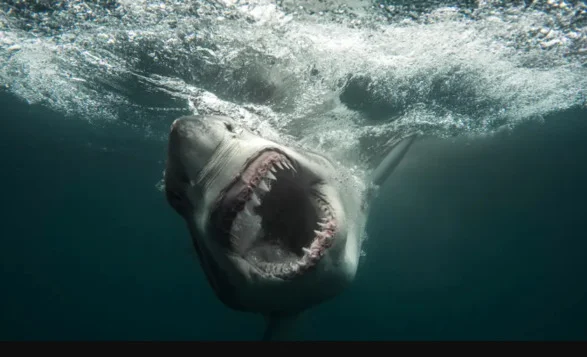
A huge mako shark nicknamed Sharkzilla has been spotted off the coast of New York. Its unusual size and reports of attacks on other marine animals sparked an extraordinary theory about possible nuclear contamination.
The shark measures almost 12 feet (3.7 meters) long. Researchers became interested in the animal after reports described unusually large bites on marine life in the area.
One reported bite removed a section about 24 inches wide from a humpback whale. A seal was left with a wound measuring around 22 inches. The shark was also blamed for attacking a tuna weighing roughly 400 pounds.
The unusual predator became the focus of a Discovery Channel Shark Week episode called Sharkzilla Takes New York. A research team set out to locate the giant mako and learn more about its behavior.
Local shark scientist Craig O’Connell suggested that the sightings could indicate the return of very large sharks to waters around New York. The region was once known for exceptionally large sharks before heavy fishing reduced their numbers.
The team eventually found Sharkzilla and collected tissue samples. The researchers wanted to determine whether the shark showed signs of radioactive contamination.
The testing was prompted partly by a controversial theory involving old nuclear waste. According to O’Connell, around 15,000 barrels of nuclear waste were dumped in the Hudson Canyon in the late 1960s. He said the barrels were reportedly found to be leaking when they were inspected years later.
However, there is no evidence that the waste caused Sharkzilla’s unusual size. The researchers’ testing found no indication that the shark was radioactive. The nuclear mutation theory therefore remains unproven.
The investigation produced another possible explanation. Researchers discovered that the underwater area is an important breeding ground for mako sharks. Female sharks may travel into productive hunting areas to obtain enough food for their young.
Experts concluded that Sharkzilla was most likely a pregnant female mako with exceptional hunting abilities. Her size and behavior may therefore have a natural explanation rather than being the result of nuclear pollution.
Mako sharks can grow beyond 13 feet (4 meters) and weigh more than 1,250 pounds (570 kilograms). They are powerful open-ocean predators and are capable of extremely fast bursts of speed.
Despite their reputation, encounters between mako sharks and humans remain uncommon. Between 1980 and 2024, only 10 recorded mako shark attacks on humans were reported, including three fatalities.
Sharkzilla’s case shows how an unusually large animal can generate dramatic theories before scientists have enough evidence to determine what is really happening. In this case, the available testing does not support the idea of a radioactive or nuclear-mutated shark.
It was previously reported that scientists were raising the alarm about sharks losing their teeth. Researchers have found that increasing ocean acidity is negatively affecting the teeth of these predators.