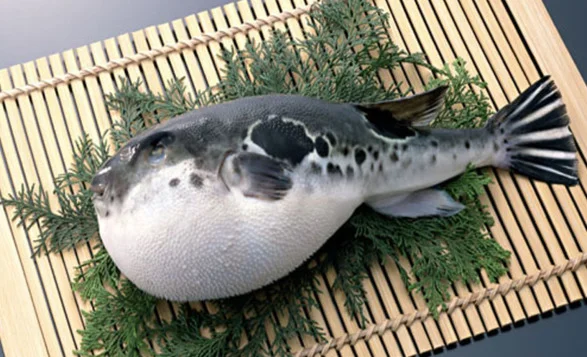
Climate Change is Making Japanese Puffer Fish More Dangerous
Fugu has always been one of Japan’s most dangerous delicacies. Now, rising ocean temperatures are creating a new problem that could make this poisonous fish even harder to prepare safely.
The Japanese delicacy is made from pufferfish, several species of which contain tetrodotoxin. This powerful neurotoxin can block nerve signals and cause paralysis, breathing failure and death.
That danger has not stopped fugu from becoming a prized part of Japanese cuisine. Instead, Japan developed strict rules around its preparation. Chefs must undergo special training and obtain a license before they can prepare fugu for customers.
Climate change is now complicating that long-established safety system.
Researchers have found that several pufferfish species are changing their traditional ranges as coastal waters become warmer. Fish that once occupied different areas are increasingly coming into contact with each other.
That creates opportunities for different species to breed. The result can be hybrid pufferfish with characteristics inherited from both parent species.
The problem is not necessarily that these hybrids contain more tetrodotoxin. The greater concern is that scientists cannot always predict where the toxin has accumulated.
VIDEO. Finding Japan’s Deadliest Dish: A full documentary. YouTube channel Andrew Fraser.
Warming seas are creating dangerous Puffer Fish Hybrids
Different pufferfish species can store tetrodotoxin in different organs. Parts considered safe in one species may therefore be dangerous in another. A hybrid can make that distinction much harder to establish.
This is particularly worrying because some hybrids can look similar to pufferfish that are already familiar to fishermen and chefs. Without careful identification, an unusual specimen could potentially enter the food supply.
Researchers have already found significant numbers of hybrids in Japanese waters. In one study, hybrids accounted for up to 40 percent of pufferfish catches in areas off Fukushima and Ibaraki.
Similar changes have been observed around Tokyo Bay, where different pufferfish species are increasingly overlapping. Scientists believe shifting ocean conditions are helping drive these changes.
Japanese researchers are now looking at genetic testing as a possible solution. DNA analysis can reveal whether a fish belongs to a known species or is actually a hybrid.
Such testing could eventually help fishermen and authorities identify suspicious catches before they reach restaurants. It may become increasingly important as ocean warming continues to alter marine habitats.
The fugu problem is also part of a much larger environmental change. Warmer seas are forcing many marine animals to move into regions where they were previously uncommon.
When species expand their ranges, they encounter unfamiliar competitors and potential mates. New breeding patterns can then emerge, sometimes producing ecological consequences that were difficult to predict.
Fugu offers an especially striking example because the consequences can extend directly to humans. A changing ocean is affecting not only where fish live, but also how safely people can use them as food.
For centuries, Japanese chefs have relied on detailed knowledge to make fugu safe enough to eat. Climate change is now challenging that knowledge with new combinations of species that scientists are still trying to understand.
The deadly reputation of fugu has never been a secret. What is changing is the environment in which these fish live. And that could make one of Japan’s most famous delicacies an even greater mystery in the years ahead.
It was previously reported that a giant so-called “doomsday fish” unexpectedly washed ashore in Indonesia. This has revived an ancient legend of deadly earthquakes and tsunamis.