The Earth is changing shape: scientists have discovered that the shape of the Earth is not static
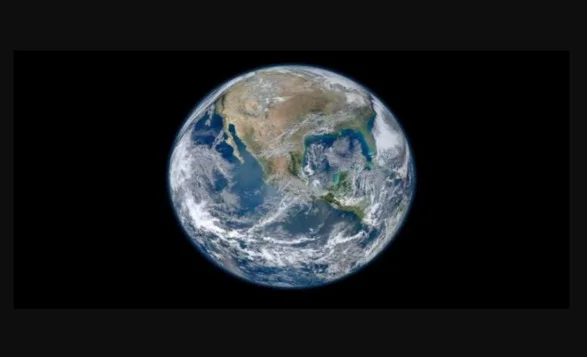
Earth may look like a perfect sphere from space, but its shape is constantly changing. A new study has revealed a surprising trend: the solid Earth is becoming slightly rounder, while its gravitational shape is changing in the opposite direction.
The research was conducted by geologist Christopher Kotsakis of the Aristotle University of Thessaloniki in Greece. He studied precise measurements from a global network of GNSS stations to track tiny vertical movements across Earth’s surface.
The research covered the period from 1997 to 2015. During that time, the polar regions began rising at an increasing rate. Between 1997 and 2000, the poles were rising by about 0.5 millimeters per year. By 2015, the rate had reached approximately 1 millimeter per year.
At the same time, parts of the Earth’s surface around the equator were sinking. Together, these movements are making the solid planet slightly less flattened at the poles and therefore a little closer to a sphere.
Melting ice is helping reshape the Earth
One important factor behind these changes is the loss of ice in Greenland and Antarctica. Massive ice sheets have pressed down on Earth’s crust for thousands of years. When their weight decreases, the land beneath them slowly rises in a process known as glacial isostatic adjustment.
But the story does not end with the rising land. Meltwater from glaciers and ice sheets eventually enters the oceans and redistributes mass across the planet. This changes the pressure on the seafloor and affects Earth’s gravitational field.
This creates the unusual situation described in the study. The physical, rocky Earth can become slightly rounder while the geoid becomes more flattened.
The geoid represents Earth’s gravitational shape rather than the visible shape of the planet. It depends on how mass is distributed around the globe, so changes in ice and ocean water can alter it.
These changes are far too small for people to notice. However, modern GNSS measurements are precise enough to detect movements of only fractions of a millimeter.
The findings show that Earth’s shape is not something fixed and permanent. The planet is continuously responding to changes in ice, water and the distribution of mass across its surface.
Kotsakis’s study was published in the Science Alert: Solid Earth, providing another example of how satellite positioning technology can reveal subtle changes taking place across our planet.
It was previously reported that the Earth has begun rotating faster than expected in recent years. This may lead scientists to introduce a historical change in world time and eliminate the time jump.