Rare Genetic Mutation Creates Mysterious Yellow Fish in US Lake
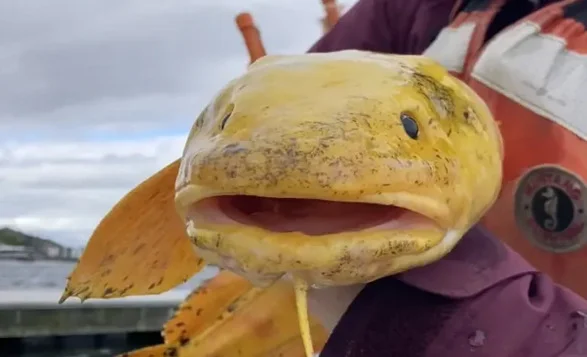
An extraordinary fish with a brilliant yellow-orange body has been discovered in the waters of Lake Ontario, attracting the attention of wildlife researchers. The unusual specimen looks dramatically different from its normally colored relatives, but its striking appearance is only part of what makes the discovery remarkable.
The fish was caught by biologists conducting a routine aquatic survey in Oswego Harbor, New York. During their work, researchers from the US Fish and Wildlife Service unexpectedly encountered a burbot displaying an exceptionally rare pigmentation condition.
The unusual coloration is caused by a biological condition known as xanthochromism. This rare genetic phenomenon affects normal pigmentation, producing an intense yellow or orange appearance that is rarely observed in wild fish. This was reported by the publication PopSci.
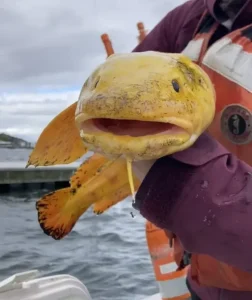
Unlike typical burbot, which usually display brownish, olive or grayish coloring, the captured specimen appeared almost golden. According to the US Fish and Wildlife Service, xanthochromism is considerably less common in wild fish than albinism or melanism.
However, the fish’s unusual appearance was not the only reason scientists became interested in the discovery.
Burbot populations in Lake Ontario are extremely low, and the species generally prefers deeper, colder waters. Finding one in Oswego Harbor was therefore particularly noteworthy.
The capture also marked the first documented detection of a burbot during a fisheries survey in the harbor. Although anglers had occasionally reported catching the species there, researchers had never previously recorded it during this type of scientific investigation.

Rare Genetic Mutation Creates Mysterious Yellow Fish
Researchers from the US Geological Survey noticed that the unusually colored burbot was severely underweight and appeared to be in poor health. Its condition raised additional questions about the factors affecting the already struggling population.
The fish was subsequently sent to Cornell University’s College of Veterinary Medicine for further examination.
Scientists hope that studying this rare specimen could provide valuable information about the health of burbot populations throughout the Great Lakes region. The investigation may help researchers better understand the challenges facing the species and identify potential measures to protect it.
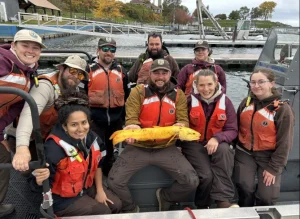
The discovery also demonstrates how routine wildlife monitoring can unexpectedly reveal extraordinary biological phenomena. Even a survey designed primarily to detect invasive species can uncover something exceptionally rare in the natural world.
For researchers, this bright-yellow burbot represents much more than an unusual-looking fish. It could become an important source of information about a species whose population remains poorly understood.
It was previously reported that fishermen had recovered a mysterious creature from the bottom of the Mariana Trench, which astonished them with its enigmatic appearance. This little-explored region of the Pacific Ocean continues to amaze scientists.