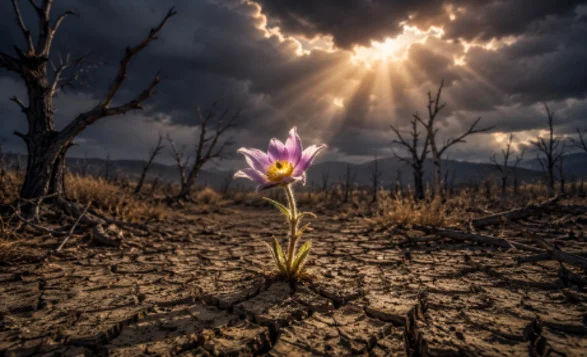
Scientists warn thousands of unique flowering plants could disappear forever
The study is the first large-scale assessment of flowering plants using the EDGE method. This approach combines two key factors. It measures how evolutionarily unique a species is and how close it is to extinction. Scientists say this helps identify the plants that require urgent protection.
The research team estimates that more than 21% of the evolutionary history of flowering plants is now under threat. Scientists have identified more than 335,000 known flowering plant species worldwide. Nearly 10,000 of them are now classified as EDGE species because they are both highly unique and globally threatened.
Unlike traditional conservation studies, this research focuses not only on the number of endangered species. It also considers how important each plant is from an evolutionary perspective. If one of these ancient branches disappears, millions of years of natural history disappear with it.
The EDGE method was created by the Zoological Society of London in 2007. It has been used successfully to identify vulnerable animal species for many years. Until now, however, flowering plants had rarely been assessed in the same way despite their essential role in every major ecosystem.
Several well-known species appear on the new EDGE list. They include Vanilla planifolia, the source of natural vanilla, the tiny water lily Nymphaea thermarum, and the spectacular Amorphophallus titanum, often called the corpse flower because of its powerful smell during blooming.
Many other plants on the list are almost unknown outside scientific circles. Some survive only in one small location on Earth. Examples include Medusagyne oppositifolia, found only in the Seychelles, and Hondurodendron urceolatum, an extremely rare tree that is the only surviving member of its entire genus.
Scientists stress that these species are valuable for much more than their rarity. Each one contains unique genetic information that cannot be replaced once it is lost. Future researchers could discover new medicines, antibiotics, disease-resistant crops, or other useful biological compounds hidden within these plants.
Flowering plants also support life across the planet. They provide food for wildlife, supply nectar for pollinating insects, stabilize soils, and help regulate the climate. Healthy ecosystems depend on them every day.
The researchers believe the findings will help governments and conservation groups use their resources more effectively. By protecting the most evolutionarily important species first, scientists hope to preserve a much larger share of Earth’s natural heritage.
The study also highlights another concern. More than two out of every five known plant species are already threatened with extinction. Scientists believe many undiscovered plants may face the same danger. Habitat destruction, climate change, pollution, invasive species, and expanding agriculture continue to put increasing pressure on fragile ecosystems.
The authors conclude that protecting flowering plants is not only about saving individual species. It is also about preserving hundreds of millions of years of evolution. At the same time, it protects natural resources that future generations may depend on for food, medicine, and scientific progress.
It was previously reported that scientists have begun to sound the alarm about global warming, which is leading to the largest loss of coral reefs in history. According to experts, more than 80% of the world’s reefs are currently suffering from bleaching.