Why 536 AD was Humanity’s most devastating year
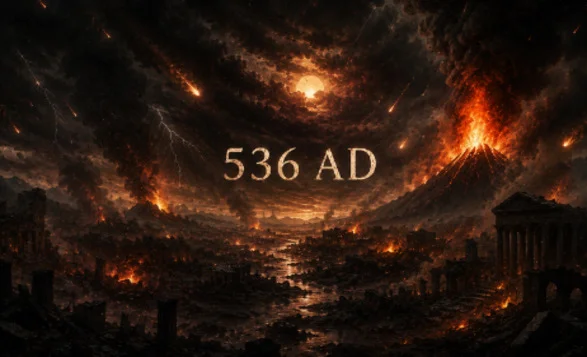
According to Harvard University researchers, 536 AD may have been the darkest and most devastating year in human history. Historians and climate scientists believe it marked the beginning of a global crisis. The disaster affected millions of people across Europe, Asia and parts of the Middle East.
For nearly a year and a half, much of Europe and parts of Asia were covered by a mysterious veil that blocked sunlight. Daylight became unusually dim. Average temperatures dropped by almost 2.5°C (4.5°F). Crops failed across vast regions. Harvests collapsed, and entire communities struggled to survive.
Scientists describe 536 AD as the coldest year of the past two and a half thousand years. The sudden cooling triggered widespread famine. It also caused economic decline and the rapid spread of disease. Together, these events created one of history’s worst humanitarian disasters.
Evidence of this dramatic climate shift appears in historical records. Ancient writers described severe food shortages across the eastern Roman Empire. They also documented the devastating plague that followed. As harvests continued to fail, populations became increasingly vulnerable to epidemics.
The situation became even worse only a few years later. In 539 AD, powerful volcanic eruptions in Iceland released enormous amounts of ash into the atmosphere. Scientists later found volcanic particles preserved in ice cores dated to 540 and 547 AD. Those discoveries confirmed that several major eruptions occurred during the same period.
Related video: 536 was the worst year to be alive—what happened?
Researchers believe the eruptions prolonged the global cooling. They also delayed the recovery of agriculture. Historical records describe destructive earthquakes during those years. Widespread flooding and fresh outbreaks of disease added to the growing crisis.
The combination of climate change, failed harvests, natural disasters and epidemics created what many historians call a perfect storm. Entire regions endured years of hardship. Some civilizations never fully recovered from the economic and social damage.
Today, scientists continue studying this remarkable period. They use tree rings, ice cores and archaeological discoveries. These natural records help reconstruct ancient climates with surprising accuracy. Researchers then compare those findings with written accounts from the period.
Many experts believe the events of 536 AD offer an important warning for the modern world. Today’s technology makes societies more resilient than in the past.
Even so, civilization still depends on stable weather and reliable food production. It also relies on predictable climate patterns. The events of 536 AD show how several natural disasters can combine into a single global catastrophe.
More than fourteen centuries have passed since those events. Yet scientists continue uncovering new evidence every year. Each discovery helps explain why this forgotten disaster changed the course of human history. It also reminds us how vulnerable civilization can become when nature changes without warning.
We previously reported that, after more than 400 years of mystery, historical researchers have finally managed to determine the exact location of William Shakespeare’s London home.