Humanoid robot successfully performs surgery on live pigs in major medical breakthrough
Researchers from the University of California, San Diego have achieved an important milestone in robotic medicine. A humanoid robot successfully assisted surgeons during a series of operations on live pigs, demonstrating that this type of technology could one day become a valuable tool in operating rooms around the world.
The results of the experiment were published in the prestigious scientific journal Nature. Although the technology is still experimental, scientists believe the successful trials show that humanoid robots may eventually help surgeons perform complex procedures with greater flexibility.
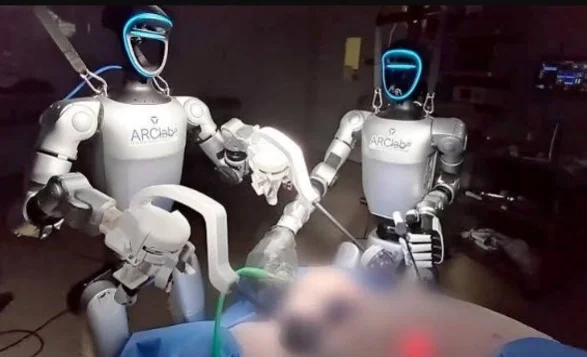
The robot used in the study was the Unitree G1, a compact humanoid platform equipped with two robotic arms. During the experiment, it assisted in seven gallbladder removal procedures performed under realistic surgical conditions at the Advanced Robotics and Controls Laboratory.
Unlike science fiction robots, the system did not operate independently. Every movement was controlled in real time by experienced surgeons using advanced motion-capture technology.
The project was led by Professor Michael Yip together with surgeons Charles Goldberg and Pritam Suresh. According to the researchers, the humanoid robot is designed to extend the surgeon’s capabilities rather than replace medical professionals.
The control system combines motion-capture sensors, foot pedals, and precision tracking devices. As the surgeon moves, the robot immediately reproduces the same actions with both robotic arms. This allows delicate surgical tasks to be performed with remarkable precision.
One advantage of the humanoid platform is that it can work inside a standard operating room. Unlike many traditional surgical robots, it does not require expensive modifications to hospital infrastructure. Researchers believe this could make future deployment easier and more affordable.
Scientists also see strong potential for remote robotic surgery. In the future, experienced surgeons could perform operations from hundreds or even thousands of kilometers away. Such technology may become especially valuable in rural hospitals, military medicine, disaster response, and even future space missions.
Researchers say clinical testing is only beginning
The team emphasizes that the recent operations were designed to demonstrate the robot’s capabilities rather than prepare it for immediate medical use. The successful procedures on live pigs represent an important research milestone, but many years of development still lie ahead.
Before humanoid robots can assist during human surgery, they must undergo extensive clinical trials and meet strict safety requirements. Regulatory approval will also be necessary before hospitals can introduce the technology into routine medical practice.
Researchers expect future studies to focus on improving precision, reliability, and ease of use. Medical schools may also need to develop new training programs so surgeons can safely operate advanced robotic systems.
The rapid development of robotics and artificial intelligence is transforming modern healthcare. Scientists believe humanoid surgical robots could eventually improve surgical precision, reduce physical fatigue during lengthy procedures, and help expand access to specialized medical care.
While human surgeons will continue making every critical decision, robotic assistants may soon become a familiar part of operating rooms around the world.
We previously reported on the world’s first humanoid robot capable of carrying a child. Scientists from China have invented the first robot capable of carrying a child in place of a woman.