Eight Water-Carved Karst Caves on Mars Could Harbor Signs of Extraterrestrial Life
Published in The Astrophysical Journal Letters, the research by lead scientist Chenyu Ding highlights how these formations could shield remnants of Martian life from harsh surface conditions.
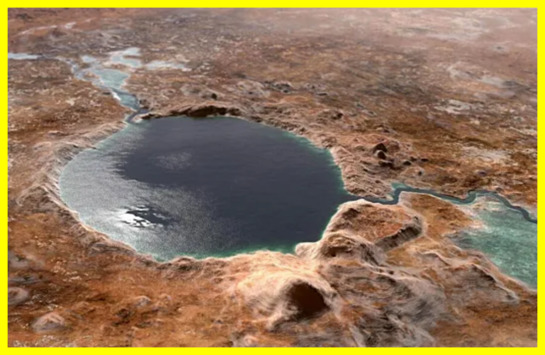
Unveiling the First Karst Caves: A Water-Driven Marvel on the Red Planet
Lead researcher Chenyu Ding and team from Shenzhen University analyzed high-resolution imagery and spectral data, confirming these Hebrus Valles caves as karstic sinkholes.
“These sinkholes may be the first documented karst caves on Mars—they represent entrances formed by the dissolution of readily soluble rocks,” the authors state in their paper.
Unlike volcanic origins, these features stem from water erosion, with surrounding rocks rich in carbonates and sulfates—minerals that readily break down in liquid.

Using data from the Mars Global Surveyor’s Thermal Emission Spectrometer (TES), scientists detected these water-soluble compounds around the nearly circular pits. 3D reconstructions further support the theory: the caves likely formed from the collapse of subterranean voids, not impacts or tectonics.
This Mars caves discovery 2025 shifts our understanding of the planet’s watery past, suggesting vast underground networks once existed.
Why These Caves Matter: Clues to Martian Life and Human Exploration
The eight sites stand out as near-perfect habitats for potential extraterrestrial life on Mars. Protected from radiation and temperature swings, these water-formed caves on Mars could preserve microbial fossils or even host surviving organisms.
Experts argue they offer stable microenvironments, shielded from cosmic rays—ideal for astrobiology missions.
Beyond biology, these karst caves Mars pose as natural bunkers for future astronauts, providing shelter during dust storms or radiation events.
The Shenzhen team urges prioritizing them for rover deployments or orbital surveys, potentially revolutionizing NASA’s Artemis or China’s Tianwen programs. As Ding notes, “Karst systems on Earth teem with life; Mars might follow suit.”
“These features could be among the most promising targets for detecting extant or fossilized Martian life, while also serving as refuges for human explorers.”
– Chenyu Ding et al., The Astrophysical Journal Letters, October 2025