The world’s first robot for carrying a baby
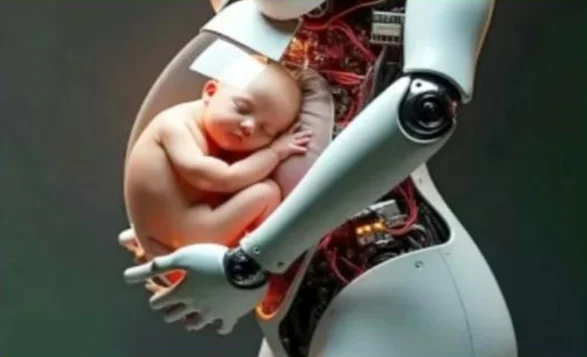
China has unveiled a prototype of the world’s first humanoid robot designed to carry a baby. The robot, developed by Kaiwa Technology, can carry a baby for ten months of pregnancy, according to Interesting Engineering. The basis of the project is an artificial uterus module filled with amniotic fluid. The embryo develops in it and receives nutrients through a tube, imitating natural pregnancy.
The founder of the startup claims that the development has undergone successful animal testing. The robot itself will appear on the market in 2026 at a price of about 100,000 yuan (approximately $15,000).
The technology is intended for young people who want to have children but want to avoid biological pregnancy, as well as for single people. The project has caused a storm of reaction on social media. The search term “world’s first pregnancy robot” topped the Weibo search rankings. Opinions are divided: critics call the technology contrary to human ethics, while supporters see it as a way to relieve women of the physical hardships of pregnancy.
If the technology eventually becomes safe and reliable, it could dramatically change the experience of motherhood. Women would no longer have to endure morning sickness, physical discomfort, hormonal changes and the medical risks associated with pregnancy. It could also offer new possibilities to women who cannot carry a child themselves or face serious health risks if they become pregnant.
However, the idea raises difficult questions that go far beyond engineering. An artificial womb would need to provide the right conditions throughout fetal development, and even small failures in temperature, oxygen supply or nutrition could have serious consequences.
There are also questions about how a child would develop without the biological connection and physical contact associated with pregnancy.
Another major concern is whether such technology could eventually turn having children into a commercial service available mainly to those who can afford it. Society would also have to decide who bears responsibility if something goes wrong and how the rights of the child and parents would be protected.
What is presented as a way to free women from the burdens of pregnancy could therefore become one of the most controversial technological developments of the coming years.
It was previously reported that a man engaged in the first-ever no-holds-barred fight with a humanoid robot. The robot looked like a real-life Terminator, and the battle turned out quite differently for the man than he expected.