ChatGPT helped a British woman identify a rare disease
A British woman says ChatGPT helped her recognize a possible explanation for symptoms that had been blamed on anxiety for almost a year. Doctors later confirmed that she had Addison’s disease, a rare condition that can become life-threatening without treatment.
Poppy Guy, a 29-year-old mother of two, first noticed something was wrong in July 2025. She developed unusual pigmentation on her arms and began feeling sick every morning.
Her health gradually deteriorated. She says she visited her doctor several times, but her symptoms were repeatedly attributed to anxiety. Medication for anxiety did not solve the problem.
By early 2026, her condition had become much worse. Poppy experienced severe dizziness, vomiting, weakness, and shortness of breath. She also noticed that parts of her skin were becoming unusually dark.
The change became especially obvious during a family holiday in Malaga, Spain. While trying to get a tan, she noticed that her skin had become dramatically darker than usual. The unusual pigmentation became one of the clues that eventually pointed toward Addison’s disease.
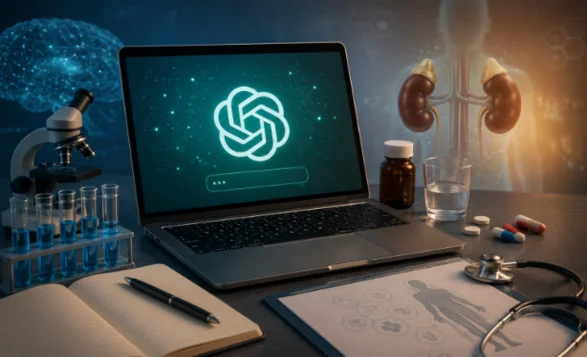
After returning from Spain, Poppy decided to research her symptoms herself. She described her condition to ChatGPT and says the AI suggested Addison’s disease as one possible explanation.
ChatGPT pointed her toward Addison’s disease
She then searched for more information about the disease. The symptoms appeared to match many of the problems she had experienced for months. Poppy took the information to her doctor and specifically asked about Addison’s disease.
She was given an urgent referral for further medical assessment. However, her condition deteriorated rapidly before the investigation could be completed.
About a week later, Poppy collapsed at home while preparing dinner. Her mother found her unresponsive and called an ambulance. She was taken to hospital and doctors diagnosed an adrenal crisis, a dangerous complication of adrenal insufficiency.
Further tests confirmed that Poppy had Addison’s disease. The condition occurs when the adrenal glands do not produce enough important hormones, including cortisol and aldosterone.
These hormones help the body regulate blood pressure, metabolism, and fluid balance. Addison’s disease can cause extreme tiredness, dizziness, weight loss, nausea, vomiting, and darkening of the skin.
An adrenal crisis can develop when the body suddenly needs more cortisol than the damaged adrenal glands can provide. Without urgent treatment, it can become life-threatening.
Poppy spent two weeks in hospital after the crisis. She says she continues to experience severe muscle weakness and now uses a wheelchair and walking frame. She also expects to remain away from work while recovering.
The case highlights both the potential and the limitations of AI in healthcare. ChatGPT did not officially diagnose Poppy. Instead, it helped her consider a rare condition that she could then discuss with a medical professional.
OpenAI told The Sun that ChatGPT can help people find clearer health information and prepare questions for doctors. The company also stressed that ChatGPT is not a doctor and should never replace professional medical care.
Poppy’s experience shows why persistent or worsening symptoms should not be ignored. It also demonstrates how AI health tools can sometimes help people find information about conditions they may not have considered. Any suspected diagnosis, however, still needs to be evaluated by qualified medical professionals.
It was previously reported that scientists have found a new way to treat Alzheimer’s and Parkinson’s diseases. Specialists have discovered a molecule that can block the development of these diseases.