Rare Immune Cells in People Over 100 Can Destroy Cancerous Cells
Scientists have discovered an unusual feature of the immune system in people who reach ancient age. Their blood contains much higher levels of a rare type of immune cell that can destroy damaged, infected, and potentially cancerous cells.
The finding may offer a new clue to the biology of human longevity. Researchers believe these powerful immune cells could help the body deal with threats that become more common as people age.
The study examined blood samples from 28 people in Japan. The participants included adults aged 70 to 90, centenarians over 100, and supercentenarians who had reached at least 110 years of age.
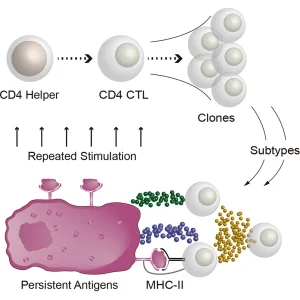
The scientists focused on a rare group called CD4 cytotoxic T lymphocytes, or CD4 CTLs. Most CD4 cells help coordinate immune responses. These unusual cells can also directly attack abnormal cells.
Rare immune cells become more common in people over 100
The difference between the age groups was striking. Among participants aged 70 to 90, CD4 CTLs made up about 4 percent of their CD4 cells. In people over 100, the proportion increased to about 9.6 percent. Among supercentenarians, it reached 17.6 percent.
Researchers also found that the cells remained active. They did not show the typical signs of immune exhaustion that can appear with aging.
Further analysis revealed an unusual transformation. The cytotoxic cells appeared to develop from ordinary T-helper cells. During this process, they gradually lost two surface proteins known as CD27 and CD28.
The researchers also discovered evidence of strong clonal expansion. About one-third of the CD4 CTLs examined came from a single original cell on average. In one centenarian, almost half of these cells belonged to the same clone.
This finding could be important because aging brings new challenges for the immune system. Older bodies accumulate damaged and senescent cells. Abnormal cells can also increase the risk of cancer and other diseases.
A stronger population of cytotoxic immune cells could help the body recognize and remove some of these threats. The researchers suggest that this adaptation may be one reason certain people maintain effective immune defenses into very old age.
VIDEO. Scientists Reveal Humans May Live Up To 156 Years | WION Podcast.
The discovery does not mean that these cells alone determine how long a person lives. The study involved only 28 people from Japan. Larger studies involving different populations will be needed to determine whether the same pattern exists worldwide.
Still, the research provides an intriguing clue about healthy aging and exceptional longevity. Instead of simply becoming weaker with age, parts of the immune system may undergo specific changes that help some people remain protected for decades longer.
Source of information: Cell Reports.
It was previously reported that after her husband’s death, a grief-stricken widow commissioned a lifelike hologram so that her husband could speak at his own funeral. The widow arranged a “grand wake”—a truly memorable and vibrant farewell instead of a standard funeral.