A Deadly Lake in the Red Sea is Killing Marine Life
Deep beneath the Red Sea, scientists discovered something extraordinary. A lake lies directly on the seafloor, surrounded by seawater. Its extreme conditions can kill marine animals that enter it.
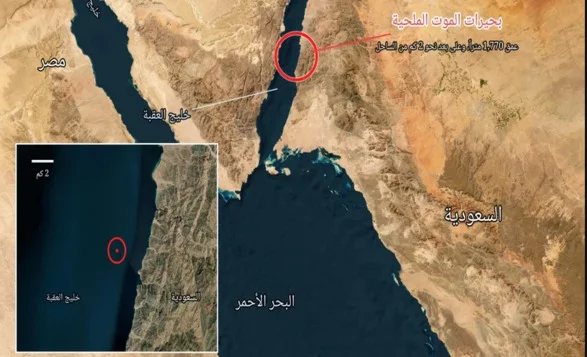
The discovery was made in the Gulf of Aqaba, off the coast of Saudi Arabia. The underwater lake rests approximately 1,770 meters below the surface. Scientists encountered it during an expedition using a robotic underwater vehicle.
The research team had spent nearly ten hours exploring the depths. Their mission was almost over when the robot encountered an unexpected sight. A distinct pool appeared on the seafloor, complete with its own surface and clearly defined edges.
Unlike an ordinary lake, this body of water exists beneath the ocean. Its unusual chemical composition keeps it separated from the surrounding seawater.
The water is extremely salty and contains virtually no oxygen. Its high density prevents it from mixing easily with the water above. This allows the underwater lake to remain intact within the surrounding sea.
For most marine animals, entering the pool can be fatal. The extreme salinity and lack of oxygen create conditions that few creatures can tolerate.
Yet the lake has not escaped the attention of nearby predators. Scientists observed a sea snake cautiously dipping its head into the water. It appeared to be searching for food among the animals killed inside the pool.
Sharks and shrimp gather around the deadly waters
A small shark was also seen circling the lake’s surface. Meanwhile, groups of shrimp gathered along its edges.
The shrimp briefly entered the hostile water to collect food. They then returned to the surrounding sea. The observations revealed a remarkable feeding ground beside an environment that can kill its inhabitants.
The lake’s deadly conditions therefore create an unusual contrast. Animals cannot safely live inside it, yet other creatures benefit from the food it provides.
The unusual environment offers another scientific opportunity. Organisms that normally disturb seabed sediments are absent from the lake’s bottom. This allows sediment layers to remain relatively undisturbed for centuries.
These layers can preserve valuable evidence of past environmental conditions. Scientists can study them to investigate changes that occurred in the region long ago.
Underwater brine lakes are rare, but scientists have discovered similar formations elsewhere. They exist in parts of the Red Sea, the Gulf of Mexico and the Mediterranean Sea.
Each pool provides an opportunity to study life under extreme conditions. Their unusual chemistry also helps researchers understand how different environments develop deep beneath the ocean.
The lake in the Gulf of Aqaba remains a striking example of the hidden landscapes beneath the sea. What appears to be an ordinary stretch of ocean can conceal a separate body of water with its own boundaries and deadly conditions.
It was previously reported that scientists are sounding the alarm after discovering a new threat beneath Antarctica’s Doomsday Glacier. This threat could cause sea levels to rise twice as much as previously expected.