
Woman’s Mysterious Winter Hibernation for Over 30 Years
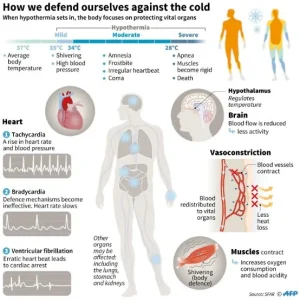
In the Netherlands, a woman experienced an unusual condition every winter for over three decades. Her activity level dropped sharply, and her body temperature sometimes dropped to 31°C (88°F). Despite these extreme episodes, she repeatedly recovered without apparent permanent organ damage.
This unusual condition first manifested itself in her early twenties. Medical records showed that the episodes occurred in winter but disappeared in summer. Doctors described the condition as reminiscent of seasonal torpor, observed in animals such as ground squirrels and dormice.
Unlike normal sleep, torpor involves a sharp decline in body temperature, activity, and energy expenditure. However, for humans, this condition is extremely unusual. At 31°C (88°F), most people are at serious risk of life-threatening complications. New Scientist reports on this mysterious case.
This case remained particularly mysterious because it persisted for decades. An MRI performed on her at age 55 revealed no unusual structural features in her brain. She later agreed to donate her brain to the Netherlands Brain Bank for scientific research. She died at age 57 after unsuccessful surgery for pneumonia.
After her death, researchers examined her hypothalamus, a region of the brain responsible for regulating body temperature, metabolism, and biological rhythms.
The analysis revealed an unusual discovery. The woman’s hypothalamus contained approximately ten times less synaptophysin than samples from three women of similar age. This protein is found in synapses—the connections through which neurons communicate.
The result suggests that the woman’s brain may have had fewer neural connections involved in temperature control and the body’s internal biological clock. The researchers also found that neurons associated with biological rhythms had almost completely lost the hormone arginine vasopressin.
Could humans ever induce artificial hibernation?
Scientists believe these neurological differences may have helped the woman’s body adapt to winter conditions. Reduced daylight hours or lower temperatures could have triggered a state reminiscent of animal torpor.
VIDEO. Triggering hibernation in humans.
However, researchers cannot yet determine whether the brain abnormalities caused this condition or developed as a result. The team is currently studying the woman’s genome to find genetic mutations that could explain this remarkable case.
These findings may ultimately have implications far beyond this individual patient. Scientists are interested in whether similar biological mechanisms can be specifically activated in humans.
Artificially slowing metabolism may one day help patients survive longer while awaiting organ transplants. It could also find application in long-duration space missions, where reduced energy and food requirements would be extremely valuable.
Cases such as these remind us how little we still understand about the human body and the hidden capabilities of the brain. Perhaps there are biological mechanisms within the human body that science is only just beginning to uncover?
Another mysterious experiment conducted over 50 years ago was previously reported. In the 1970s, an experiment on ghosts took an unexpected turn. Scientists attempted to contact a fictitious ghost from the past, and it responded