Scientists have identified a key mechanism of human aging
Scientists in the United States have uncovered a biological process that may play a major role in human aging. The research suggests that age-related changes in the immune system prevent the body from efficiently clearing worn-out immune cells.
As these cells accumulate, they trigger chronic inflammation, a condition widely linked to aging and many age-related diseases.
The findings, published in the journal Science, provide new insight into why the body’s natural repair systems become less effective over time. Although the discovery does not represent a cure for aging, researchers believe it could open new directions for therapies aimed at extending healthy lifespan.
The study focused on two essential types of immune cells: macrophages and neutrophils. Macrophages act as the body’s cleanup crew, removing dead cells, damaged tissue, and harmful microbes. Neutrophils are the immune system’s first responders. They rapidly attack bacteria, viruses, and other threats before naturally dying once their job is complete.
In young, healthy individuals, macrophages quickly recognize and eliminate aging neutrophils. This continuous cleanup process helps maintain tissue health and prevents unnecessary inflammation.
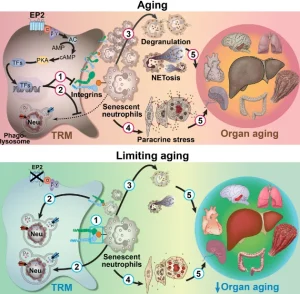
The new research found that this system gradually breaks down with age. Older neutrophils begin producing unusually high levels of a protein called CD47.
Scientists often describe CD47 as a “don’t eat me” signal because it prevents macrophages from recognizing cells that should be removed.
As a result, damaged neutrophils remain inside the body much longer than they should. Their accumulation keeps the immune system in a constant state of low-level activation. This persistent chronic inflammation, sometimes called “inflammaging,” is considered one of the biological hallmarks of aging.
Long-term inflammation has been associated with cardiovascular disease, Alzheimer’s disease, Parkinson’s disease, arthritis, diabetes, and several forms of cancer. Many scientists believe it contributes to the gradual decline of multiple organs throughout the body.
To investigate whether this process could be reversed, researchers performed experiments using aged mice. They blocked the activity of the CD47 protein and observed how macrophages responded.
After CD47 was inhibited, macrophages regained their ability to remove aging neutrophils efficiently. Levels of chronic inflammation declined, and several tissues showed signs of improved function. These findings suggest that restoring normal immune cleanup may help slow some biological processes associated with aging.
Scientists caution that the results are still limited to laboratory research. Much more work is required before similar treatments can be tested safely in humans. Future studies will need to determine whether targeting CD47 produces long-term benefits without causing unwanted effects on the immune system.
Even so, experts consider the discovery highly significant. Instead of attempting to stop aging itself, future therapies may focus on improving the body’s natural ability to remove damaged cells and control inflammation.
Such an approach could reduce the risk of numerous age-related diseases while helping people remain healthier for longer.
It was previously reported that scientists were asking the question: “When will humanity be able to live for 1,000 years?” Experts in technology and biomedicine claim that humanity is on the verge of a breakthrough.