Jesus’ True Tomb May Have Been Found After 2,000 Years
Archaeologists have uncovered new evidence about the landscape surrounding the traditional burial site of Jesus Christ. The discoveries were made beneath the Church of the Holy Sepulchre in Jerusalem.
The findings do not contain an inscription naming Jesus. However, researchers say the ancient remains closely match important details described in the New Testament. The evidence includes an abandoned stone quarry, cultivated areas and rock-cut tombs dating to the first century.
The archaeological project was led by Professor Francesca Romana Stasolla of Sapienza University of Rome. Researchers investigated underground structures beneath the church during a major restoration project. The results of this study are reported by the Daily Mail.
The excavation revealed that the area was once a large stone quarry. After quarrying ended, parts of the site were filled with soil and reused for other purposes. Researchers found evidence of vegetation and cultivated areas that existed during the relevant historical period.
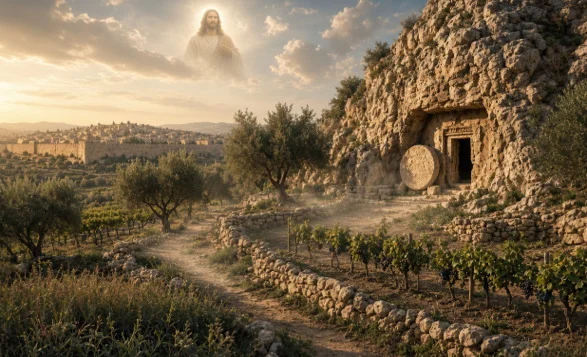
Archaeobotanical evidence points to plants associated with agriculture. Among the remains were indications of grapevines and olive trees. This suggests that the former quarry was transformed into a cultivated landscape after stone extraction stopped.
The site also contained rock-cut tombs and other features connected with ancient burials. The remains provide a picture of how the area may have looked during the first century, when Jerusalem was under Roman rule.
The location is particularly significant because of its connection with the Gospel accounts of Jesus’ death and burial. The Gospel of John describes a garden near the place of crucifixion and mentions a new rock-cut tomb nearby.
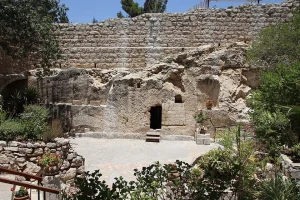
Ancient evidence beneath the church matches the biblical landscape
The archaeological discoveries correspond with several details described in the New Testament. The area was outside the ancient city walls, which fits the description of Jesus being crucified outside Jerusalem.
The location of the quarry is also important. Once stone extraction ended, the abandoned sections could be used for agriculture and burials. Rock faces created natural spaces where tombs could be cut into the stone.
Researchers believe this changing landscape helps explain how the area developed before becoming a major Christian sanctuary. A place that had once been a quarry eventually contained gardens, burial chambers and paths connecting different parts of the site.
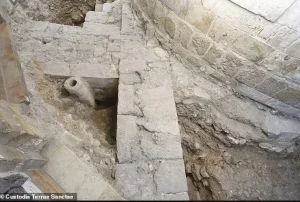
Several centuries later, the area became central to Christianity. Roman Emperor Constantine ordered the construction of a monumental church complex there during the fourth century.
Workers reportedly preserved a particular tomb that was already venerated by Christians as the burial place of Jesus. The architects designed the complex around the location rather than simply removing the ancient tomb.
Modern excavations are now revealing the layers that existed beneath the church. Archaeologists can compare physical evidence with historical and biblical descriptions to reconstruct the area’s development.
However, the discovery does not provide direct proof that Jesus himself was buried in the tomb. Researchers have found no inscription identifying him. There is also no archaeological evidence confirming that the tomb belonged to Joseph of Arimathea.
Scientists are also cautious about the agricultural evidence. Laboratory analysis cannot establish with absolute certainty that the garden was being cultivated at the exact time of Jesus’ crucifixion.
Nevertheless, the dating of the archaeological remains places the landscape within the relevant historical period. The discovery therefore adds important evidence to the long-running mystery of Jesus’ burial site.
VIDEO. What Scientists Just FOUND Beneath Jesus’ Tomb in Jerusalem Will Leave You Speechless.
The research also provides a rare glimpse into ancient Jerusalem. It shows how a stone quarry was transformed into a landscape containing vegetation and tombs before the area eventually became one of Christianity’s most important places of worship.
For archaeologists, the findings do not finally solve every question surrounding the traditional tomb of Jesus. They do, however, strengthen the historical case for the ancient landscape preserved beneath the Church of the Holy Sepulchre.
Photos used in this article: Garden Tomb: Gary Todd / Wikimedia Commons. Archaeological excavation: Custodia Terrae Sanctae.
It was previously reported that, following NASA research, scientists from Oxford University suggested that the crucifixion of Jesus Christ occurred on Friday, April 3, 33 AD. According to calculations of the trajectories of the Earth, Moon, and Sun, a lunar eclipse occurred over Jerusalem on that day.