The humanoid robot Lightning breaks a human record
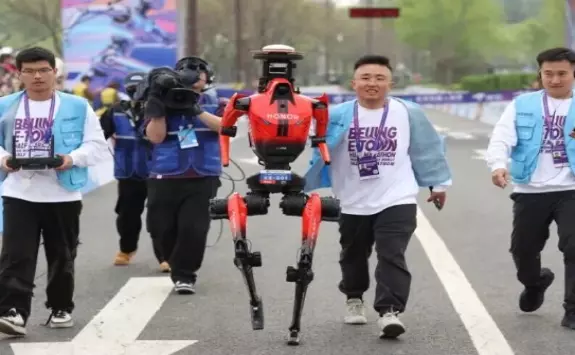
On April 19, 2026, the second-ever international half marathon featuring humanoid robots took place in Beijing’s E-Town technology district.
Over 12,000 human runners and over 300 humanoids simultaneously started on the same course, but the robots ran in a separate, dedicated lane.
This isn’t just a sports show; it’s a true test of cutting-edge artificial intelligence technologies in real-world conditions.
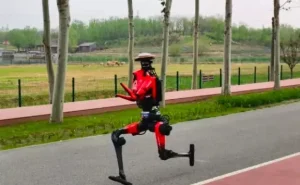
The overall robot champion was “Shandian” (Lightning) from Honor’s Qitian Dasheng (Monkey King) team.
It completed the 21.0975 km course in 50 minutes 26 seconds. This is more than three times faster than the record set by the first half marathon in 2025.
The robot operated completely autonomously: without remote control, relying solely on its own sensors, cameras, and navigation algorithms.
The organizers emphasize that the course this year has become more challenging. It featured more than ten different types of surfaces—straight sections, climbs, turns, and narrow passages.
This was deliberately designed to increase the challenge in order to test the stability, energy efficiency, and precision of the robots’ movements in a real urban environment.
The Beijing Half Marathon is more than just entertainment. It’s a large-scale testing ground for humanoid robots in real life.
The Humanoid Robot and Its Future
China is actively investing in the industry, striving to make humanoid robotics a key economic sector. These competitions accelerate the development of autonomous navigation, balance, energy conservation, and human-like running simulation.
Today, robots are already demonstrating progress that would have seemed impossible just a year ago: from 2 hours 40 minutes to 50 minutes—a revolution in 12 months.
Experts predict that such races will become regular events in the coming years, and robots will begin participating in even more complex events.
The 2026 Beijing Half Marathon has proven that the era when AI not only assists humans but also competes on equal terms has already arrived.
We previously reported on another cutting-edge technological innovation. In China, a prototype of the world’s first humanoid robot designed to carry a baby as if it were in the womb was unveiled.