He Was Found in the Jungle 30 Years After World War II Ended
Imagine hiding in a tropical jungle for decades, convinced that enemy forces could still be nearby. The world changes beyond the trees. Cities grow, technology advances, and humanity reaches the Moon. Yet deep in the forest, one soldier continues living as if the Second World War never ended.
This extraordinary story belongs to Teruo Nakamura, a soldier whose decades in isolation became one of the most remarkable episodes of the postwar era.
Nakamura was born in Taiwan in 1919, when the island was under Japanese colonial rule. He belonged to the Amis, an Indigenous people of Taiwan. In 1943, he joined a Japanese military unit and was sent to Morotai, an island in what is now Indonesia.
In September 1944, Allied forces landed on Morotai. Japanese troops were scattered, and some survivors retreated into the jungle. Nakamura was among those who disappeared into the dense vegetation.
Japan surrendered in August 1945. For most soldiers, the war was over. For Nakamura, however, survival became a struggle that would consume almost three decades of his life.
He initially lived among other Japanese soldiers who had remained behind. Eventually, he separated from them and established his own hideout. He built a small hut, cleared land for cultivation, and grew food to survive.
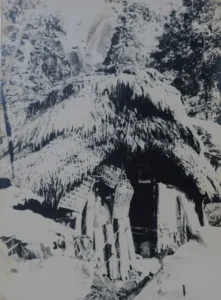
The jungle became his entire world. He kept his rifle in working order and avoided people who might discover his shelter. Whether he genuinely believed the war was continuing or feared what would happen if he surrendered, he remained hidden long after the fighting had stopped.
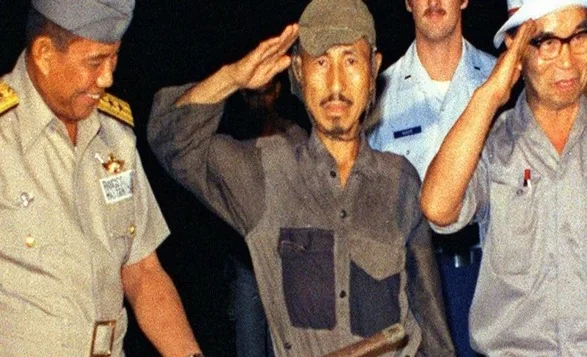
Rare footage of Teruo Nakamura being transported to Japan. 1974.
Thirty years in hiding and the discovery that changed everything
By the 1970s, the world had transformed beyond recognition. Humans had walked on the Moon, and the countries involved in the war had rebuilt their societies. Nakamura, meanwhile, was still living in isolation on Morotai.
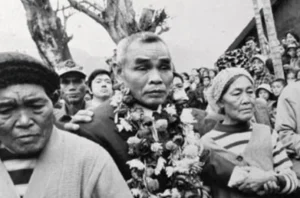
In 1974, a pilot spotted a small hut on the island. The discovery eventually led Indonesian authorities to organize a search. On December 18, soldiers found Nakamura, then 55 years old, and brought his extraordinary isolation to an end.
The man emerging from the jungle had spent nearly 30 years separated from the world he once knew. His homeland had changed, political borders had shifted, and the future he returned to was nothing like the life he had left behind.
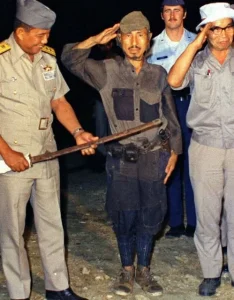
Nakamura was sent to Taiwan rather than Japan. His wife, who had believed him dead, had remarried years earlier. The homecoming he might have imagined during his lonely years was no longer possible in the way he had once known it.
His final years were brief. He died in 1979, only five years after being found.
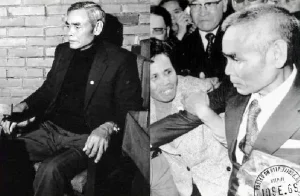
Teruo Nakamura’s story is more than a tale of extraordinary survival. It is a haunting reminder that a war can end on paper while its consequences continue shaping individual lives for decades. Somewhere in the Indonesian jungle, one man’s world had remained frozen in 1945, even as the rest of humanity moved into a different age.
Source of information: Alchetron. Wikipedia.
It was previously reported that historians have once again raised the historical question: “Did Hitler kill his niece in 1931?” It has now become known that newly discovered death registry records refute the Nazi leader’s 95-year alibi for the case of his niece, Geli Raubal.