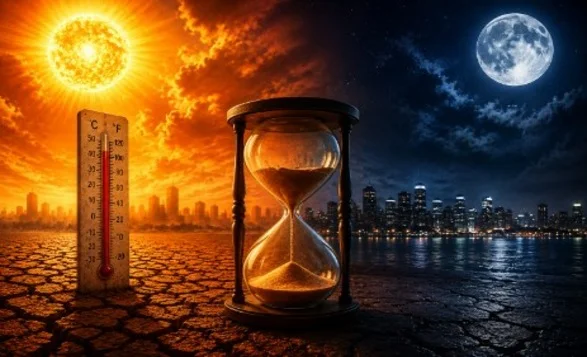
Extreme Heat Could Last 4 Hours Longer by 2100
Future heat waves could become longer and more dangerous than anything seen today. Scientists warn that extreme heat may occupy several extra hours during hot days by the end of this century.
The biggest concern is that much of this additional heat could continue after sunset. Nights normally provide relief from daytime temperatures. In a warming climate, that recovery period may become much shorter.
Researchers examined hourly temperature data from around the world. Their analysis covered land temperatures between 1981 and 2023.
They found about 269 hours of extreme heat occur across land each summer. Future climate projections show a much more serious pattern under a high-emissions scenario.
Between 2070 and 2099, a typical hot day could contain more than four additional hours of extreme heat. This would represent a major increase compared with current conditions.
Scientists are particularly concerned about night-time heat. The human body normally cools down during the evening and overnight hours.
When temperatures remain unusually high, that natural cooling process becomes harder. People may struggle to recover from daytime heat before the next hot period begins.
This can increase the risk of serious illness. Older adults, children and people with existing health problems may face the greatest danger.
The problem could also become more severe during prolonged heat waves. Several hot days in succession can prevent the body from fully recovering, especially when nights remain warm.
Researchers also warned that low- and middle-income countries could face a disproportionate share of the future heat burden. Many of these countries have contributed less to historical greenhouse gas emissions.
That makes climate change not only an environmental issue but also a major public health challenge.
Scientists say more detailed hourly temperature studies could improve heat warning systems. Instead of focusing only on daily maximum temperatures, authorities could track how long dangerous heat lasts.
Better hourly forecasts could help cities prepare residents for dangerous conditions. They could also improve decisions about cooling centers, emergency services and public health warnings.
The warning comes as parts of Western Europe experience exceptional summer heat. According to the report, the region recorded its hottest June-July period on record.
The average temperature reportedly reached 21.62°C. That was 2.79°C above the previous record set in 2022.
With global warming continuing, extreme heat may become longer and more persistent. The most dangerous change could happen after the sun goes down, when people expect the heat to finally disappear.
Source: Daily Mail.
It was previously reported that scientists had uncovered a key mechanism of human aging. This discovery could help people stay healthy in old age. Age-related changes in the immune system prevent the body from effectively removing worn-out immune cells.