AI clone of deceased son: Chinese family conceals death from 80-year-old mother
A story that is both touching and controversial is unfolding in China. A family created an AI clone of their deceased son to protect his 80-year-old mother from the shock of her only child’s tragic death.
Now the elderly woman communicates with the digital double daily via video, sincerely believing that her son is alive and simply working in another city. This was reported by the South China Morning Post, citing the AI developer.
Early last year, a terrible accident occurred in Shandong Province, eastern China. The family’s only son died in the accident. His mother, a woman in her 80s, had heart problems.
The family feared the news of his death would be a fatal blow. Instead of telling the truth, they took a radical decision: they turned to artificial intelligence specialist Zhang Zewei.
His team specializes in creating emotional AI avatars—so-called “ghost bots”—that help people cope with loss.
How AI clone of deceased son
To create an AI clone of their deceased son, relatives provided hundreds of photographs, videos, and voice recordings of the man, including speech in his native dialect.
The AI carefully analyzed his appearance, facial expressions, voice, and even habits—for example, his characteristic posture, where he leans slightly forward while speaking.
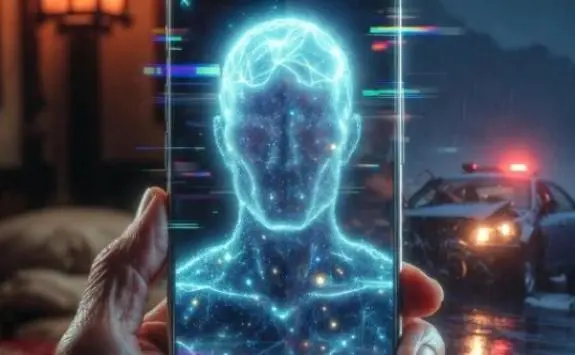
The result exceeded expectations. The digital twin turned out to be incredibly realistic: it replicates not only his appearance and voice timbre, but also his manner of speaking.
Now the “son” regularly calls his mother, texts, and video chats, explaining why he can’t come: “Work is in another city, I’m busy.”
The story of the deceased son’s AI clone is part of a growing trend. In China, companies have been offering “digital immortality” services for several years.
For $700–$1,400, relatives can obtain a fully functional AI double of the deceased.
Despite the family’s good intentions, the story raises serious debate. On the one hand, the AI clone does protect the elderly mother from stress.
Will a sudden “second farewell” cause an even greater blow to her psyche?
Technology is developing rapidly. Today, AI can not only copy a person’s voice and appearance but also generate new phrases based on their personality.
In the future, such digital doubles may become a common way to maintain contact with deceased loved ones, especially for the elderly who are struggling with loss.
However, experts advise families to carefully weigh all the risks. After all, artificial intelligence, no matter how realistic it may be, is still just a simulation.
When will humanity be able to live for 1,000 years? We previously reported that global scientists in the fields of technology and biomedicine claim that humanity is on the verge of a breakthrough.