Africa Is Splitting Apart and a New Ocean Will Form
The map of Africa will eventually look very different from today. Deep beneath eastern Africa, enormous geological forces are pulling the continent apart. Scientists now say one section of this vast fracture is much closer to continental breakup than previously thought.
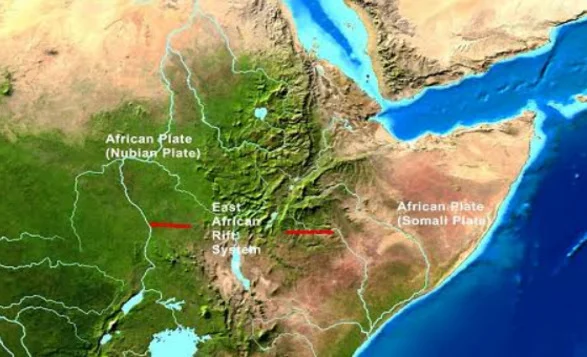
The process is taking place along the East African Rift, a huge zone stretching across several countries. The crust there is being stretched from opposite directions. Over time, it becomes thinner, weaker and increasingly unable to hold the continent together.
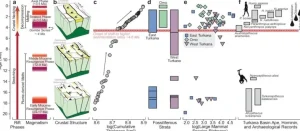
Researchers investigated the Turkana Rift, an important part of the system located between Kenya and Ethiopia. Instead of relying only on surface observations, they used seismic waves to investigate what is happening deep underground.
The measurements revealed an extraordinary difference in crustal thickness. Near the center of the rift, the continental crust has been reduced to roughly 13 kilometers. Near its outer sections, it remains more than 35 kilometers thick.
That extremely thin zone is significant because scientists consider around 15 kilometers a critical threshold. Once continental crust becomes this thin, the geological process can move toward the creation of a completely new oceanic basin.
Eastern Africa could eventually become a separate landmass
The transformation will not happen suddenly. It will unfold over millions of years as the rift continues widening. Eventually, molten rock from Earth’s interior can rise through the weakened crust. When that material cools, it creates new oceanic crust.
As the opening grows deeper and wider, seawater could eventually flood the developing basin. The result would be a new ocean separating large parts of eastern Africa from the rest of the continent.
Eastern Africa is already moving toward this geological separation. The African continent is gradually dividing into the Nubian and Somali plates, although the movement is so slow that it cannot be noticed during a human lifetime.
The same geological activity may also help explain why the Turkana region contains such an important record of early human ancestors. The rift has repeatedly altered the landscape, creating basins where layers of sediment accumulated.
Those sediments can bury and protect fossils for millions of years. Researchers suggest that changes associated with the development of the rift may therefore have played a role in preserving some of the remarkable fossil record found in the region.
There is no danger of Africa suddenly splitting apart in our lifetime. But the evidence from beneath the Turkana Rift shows that the process has already progressed surprisingly far.
Given enough time, the forces operating almost invisibly beneath eastern Africa could redraw the continent and create an entirely new ocean where solid land exists today.
Source of information: Science Alert.
It was previously reported that scientists had discovered a new way to save African lands from drought. Currently, agriculture in much of Africa still depends on rainfall. The new strategy proposes a systematic and structured approach to water resource management.