A Nazi submarine still poses a threat at sea 80 years after it was sunk
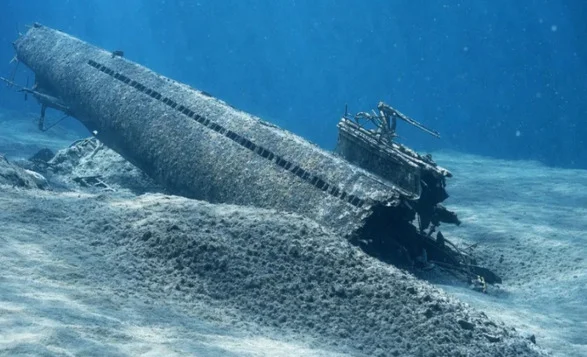
More than eight decades after a German submarine disappeared beneath the waters off Norway, its final mission still has dangerous consequences. The wreck of U-864 lies on the seabed with a huge cargo of toxic mercury.
The submarine sank near the island of Fedje in February 1945. It now rests at a depth of about 149 meters. For decades, the wreck remained hidden beneath the sea. Its unusual cargo later turned the site into a major environmental problem for Norway.
U-864 was carrying around 67 tons of liquid mercury when it sank on February 9, 1945. The war in Europe would end only three months later.
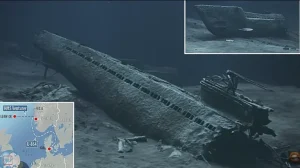
The submarine was taking part in a secret German mission. Its intended destination was Japan. The cargo included mercury, which was an important material for Japanese military production.
British intelligence learned about the submarine’s movements after intercepting German naval communications. HMS Venturer was sent to search for the German vessel.
The British submarine eventually located U-864 off the Norwegian coast. Its commander ordered an attack with four torpedoes. One of them struck the German submarine and destroyed it.
All 73 people aboard U-864 were killed. The submarine then sank to the seabed, where it remained for more than 60 years before its location was discovered.
VIDEO. SONAR Scanned The Inside of U-864 – What They Discovered Inside Confirms EVERYTHING!
Nazi Submarine Still Threatens Norway 80 Years After Sinking
The wreck became a serious environmental concern because of its cargo. Around 67 tons of liquid mercury had been stored inside special steel containers.
Decades underwater have taken a toll on the wreck and its cargo. Corrosion has damaged the containers, allowing mercury to escape into the surrounding seabed.
Norwegian authorities recently examined the site with a remotely operated vehicle. They recovered 22 mercury containers for further inspection. Around 80 percent showed signs of leakage.
This has created a difficult problem. Removing the entire submarine could disturb the wreck and release additional mercury into the environment. Moving the damaged containers could also be dangerous.
One possible solution is to leave U-864 on the seabed. Authorities could cover the wreck and contaminated area with protective material. This would create a barrier between the mercury and the surrounding marine environment.
Local activists have called for the submarine to be removed instead. They are also concerned about weapons that remain inside the wreck, including torpedoes.
The Norwegian government has not yet made a final decision about the submarine’s future. More than 400 million Norwegian kroner has already been spent investigating U-864 and dealing with the environmental threat.
For now, the German submarine remains where it sank during the final months of World War II. Its secret mission ended more than 80 years ago, but its dangerous cargo continues to create problems today.
It was previously reported that divers continue to risk their lives exploring the 70-year-old liner in search of terrifying secrets and unique artifacts. The luxury Italian liner sank in July 1956 after colliding with the Swedish liner Stockholm in dense fog.