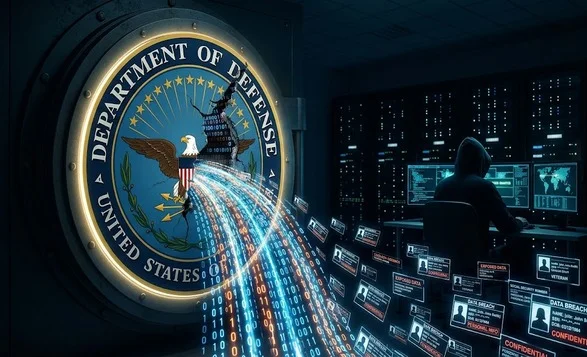
Pentagon Data Breach Exposes Records of Over 3 Million People
A high-stakes cybersecurity failure within the US Department of Defense went unnoticed for nearly three quarters of a year, leaving millions of personal files exposed to unknown actors. ABC News reports this.
The breach struck deep at the Defense Manpower Data Center (DMDC)—an essential federal node tasked with safeguarding private histories for active service members, civilian personnel, defense contractors, military families, and veterans.
Official estimates indicate that the exposure compromised roughly 2.76 million living individuals along with nearly 294,000 deceased personnel. Intruders managed to pull critical identifiers from individual dossiers, including Social Security numbers, career histories, and sensitive personal parameters embedded inside the system.
The operational timeline is what makes the breach particularly troubling for defense leadership. Unauthorized users quietly gained access to the DMDC network back in October 2025, maintaining their foothold until security teams finally spotted and patched the entry point in July 2026.
While the entire database holds upwards of 60 million entries, the surgical scope of this intrusion has triggered widespread concern across intelligence circles.
Pentagon representatives have declined to comment on the identity or origin of the intruders, withholding confirmation on whether the operation stems from foreign state espionage, criminal syndicates, or an internal loophole.
Although defense officials assert there is no immediate proof of data exploitation, identity theft monitoring and credit protection services are being deployed to assist those affected.
The situation leaves open a critical unanswered question: who spent months quietly examining the Pentagon’s internal personnel registries, and what is the ultimate objective behind the stolen intelligence?
Major cyber intrusions targeting U.S. government infrastructure are not entirely unprecedented. Back in 2015, the Office of Personnel Management (OPM) suffered one of the most catastrophic security failures in American history, where foreign state-sponsored hackers exfiltrated sensitive background investigation files belonging to over 21 million current and former federal employees.
Similarly, previous security breaches at the Department of Veterans Affairs exposed personal records and health identifiers of millions of veterans, highlighting a persistent systemic vulnerability across federal data storage networks.
The recurring nature of these incidents underscores how intelligence repositories remain prime targets for sophisticated adversarial operations aiming to build massive dossiers on federal personnel.