Iran War And the Four Biblical Signs of Armageddon
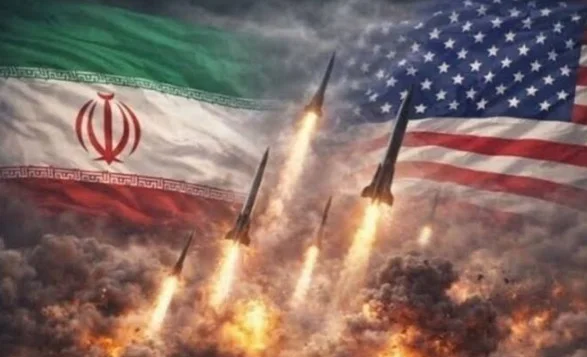
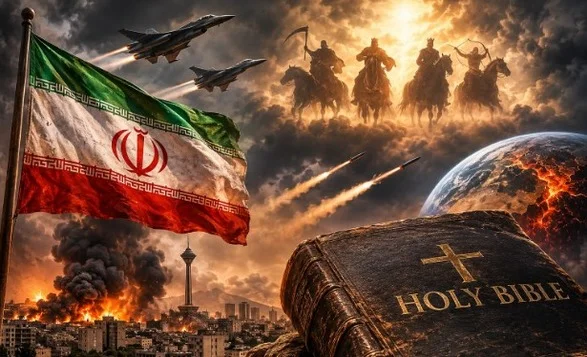
A growing conflict in the Middle East has brought an unusual prediction back into the spotlight. Former aerospace engineer Mark Davidson believes current events involving Iran could match a sequence of biblical signs described centuries ago.
Davidson developed his theory more than two decades ago. He believes several passages from the Books of Daniel and Revelation describe four major events leading toward the end times. Now, he claims the first signs have already appeared, while the next stage could unfold within the coming years.
His interpretation connects ancient biblical imagery with modern political and military developments. The theory has attracted renewed attention as tensions around Iran and the Strait of Hormuz continue to dominate international headlines. The Daily Mail writes about this.
Four signs that could lead toward Armageddon
Davidson’s first sign concerns Iraq and the fall of Saddam Hussein. He compares the biblical image of a winged lion in the Book of Daniel with ancient Babylon, whose territory was located in modern-day Iraq. He interpreted the lion’s transformation as a symbol of political change. In his view, the 2003 invasion and the removal of Saddam Hussein marked the fulfillment of this first stage.
VIDEO. The ancient Lion of Babylon, a symbol of Mesopotamia, near the historic ruins of Babylon in modern-day Iraq. Source: AP Archive.
The second sign focuses directly on Iran. Davidson associates the two-horned ram described in Daniel’s eighth chapter with the ancient kingdoms of Media and Persia. He believes its horns represent Iran’s supreme leadership and the Islamic Revolutionary Guard Corps.
He also interprets the ram’s expansion in several directions as a reference to Iran’s regional ambitions. Its ability to resist attacks, he argues, reflects the survival of the Iranian regime despite military pressure.
Davidson connects this stage with the red horseman in the Book of Revelation. He believes the biblical image of peace being taken from the Earth could symbolize a major global crisis. Disruption to oil supplies through the Strait of Hormuz, he warns, could trigger consequences far beyond the Middle East.
The engineer has suggested that a wider Iranian offensive could become possible if the United States withdraws from the region and Israel becomes overwhelmed by conflicts near its borders. He has even pointed to the coming winter as a possible period for such developments, although this remains his personal prediction.
The third sign involves the black horseman from Revelation. Davidson interprets this figure as a symbol of food shortages and economic hardship. He believes a prolonged disruption of shipping through the Strait of Hormuz could also affect fertilizer supplies, threatening agricultural production.
He further predicts that a coalition of four Sunni states could eventually defeat Iran. This interpretation is based on the biblical account of a goat overcoming the ram.
The final sign concerns the appearance of the Antichrist. Davidson believes the figure described as a little horn in Daniel’s prophecy could emerge from a successor state following the collapse of a regional power. He has suggested Syria as a possible place of origin.
Davidson first developed his ideas after the September 11 attacks. He later published them in his 2014 book, *Daniel: A New Look*. He says his intention is to warn people about what he believes may lie ahead.
However, his conclusions represent a personal interpretation of biblical passages. There is no established evidence that the current conflict fulfills these prophecies. Whether the parallels are meaningful or coincidental remains a matter of interpretation.
Still, the combination of ancient predictions, modern warfare and fears of a wider regional crisis continues to fuel questions about how much more dangerous the situation could become.