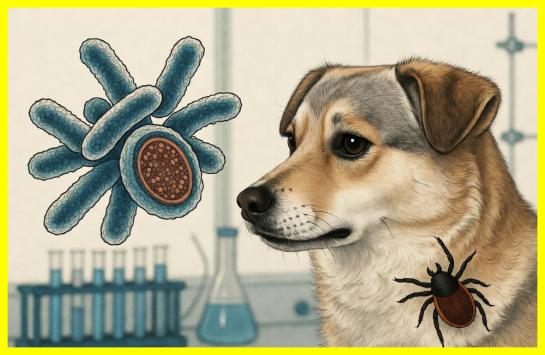
Scientists Discover New Tick-Borne Pathogen Dangerous to Dogs and Potentially to Humans
A research team has identified and fully characterized a previously unknown bacterial species — Rickettsia finnyi.
The pathogen causes severe tick-borne illness in dogs with symptoms strikingly similar to Rocky Mountain spotted fever in humans. The study was published in Emerging Infectious Diseases (December 2025).
Affected dogs exhibited high fever, extreme lethargy, and a sharp drop in platelet count — clinical signs almost identical to those seen in the most dangerous human rickettsial infections.
The bacterium was successfully isolated from a sick dog’s blood, cultured in the laboratory, and its complete genome was sequenced.
Genetic analysis confirmed that Rickettsia finnyi is a distinct new species, most closely related to the causative agents of severe spotted fever group rickettsioses.
Why This Discovery Matters for Human Health
Most rickettsial species are zoonotic, meaning they can jump from animals to humans. Dogs frequently serve as sentinels, revealing the presence of emerging pathogens in an area before human cases appear.
The primary suspected vector is the widely distributed lone star tick (Amblyomma americanum).
Key Facts About Rickettsia finnyi (2025)
- Brand-new species within the genus Rickettsia
- Causes severe febrile illness and thrombocytopenia in dogs
- Genetically close to agents of life-threatening spotted fevers
- Potentially zoonotic — poses a risk to humans
- Transmitted by lone star ticks
The authors strongly recommend immediately adding Rickettsia finnyi to diagnostic panels for both veterinary and human medicine and intensifying tick-control and surveillance programs in affected regions.