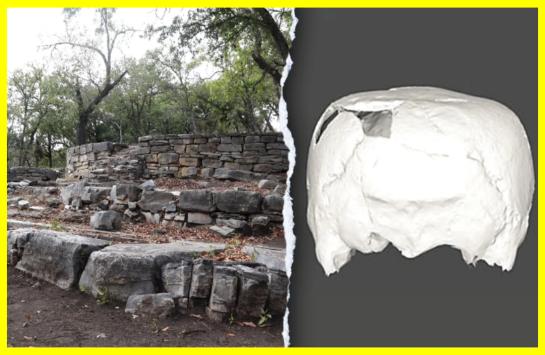
Cubic-Shaped Skull from 1,400 Years Ago: Extraordinary Discovery of Intentional Cranial Modification in Mexico
Unique Features of the Ancient Skull
The remains belong to a man who died at around 40–50 years of age and lived between 400 and 900 CE, during the Classic period of Mesoamerica.
The cubic skull exhibits a rare combination of two types of artificial deformation: tabular erecta (vertical compression) and tabular superior (upper compression), resulting in a flattened top and an almost rectangular, cube-like appearance.
Analysis of the bones and teeth indicates that the individual was born, lived, and died in the mountainous Sierra Madre Oriental region, with no signs of migration from distant areas.
Why Did Ancient Cultures Practice Cranial Modification?
Intentional cranial deformation was a widespread cultural practice across Mesoamerica. Performed in early childhood using wooden boards, bindings, or special cradles, it permanently altered the shape of the skull.
Such modifications often served as markers of ethnic identity, social status, group affiliation, or religious beliefs. The altered shape also allowed for distinctive headwear and ornaments.
While skull shaping is known from other Mesoamerican cultures (including the Maya and peoples of Veracruz), this particular cubic variant is unprecedented in the northern Huasteca.
Researchers suggest the man may have held a special role in his community — possibly shamanic or ritual functions — though it does not necessarily indicate elite status.
VIDEO. Why did King Tut have a flat head?
Significance of the Discovery
This is the first recorded instance of cranial deformation at Balcón de Montezuma and introduces a previously unknown style of modification to the region.
The finding highlights cultural connections between highland Huasteca communities and broader Mesoamerican traditions, as well as possible influences from northern Mexico.
The excavation is part of the renewed “New Investigations at the Balcón de Montezuma Archaeological Zone” project, resumed after a 30-year hiatus.
Source: Official INAH press release and international media coverage (2025). Read the original INAH announcement here.