The White Death: How Ordinary Finnish Farmer Simo Häyhä Became a Legend
Before the war, Simo Häyhä lived a quiet life in the Finnish countryside. He worked as a farmer, hunted in the forests, and participated in shooting competitions. But when the Soviet Union invaded Finland in November 1939, his life changed dramatically.
Born in 1905 in the village of Rautjärvi, Karelia, Häyhä was the seventh of eight children in a farming family. He developed a passion for hunting during childhood. At 17, he joined the local Finnish Civil Guard unit in his hometown.
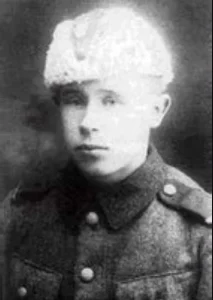
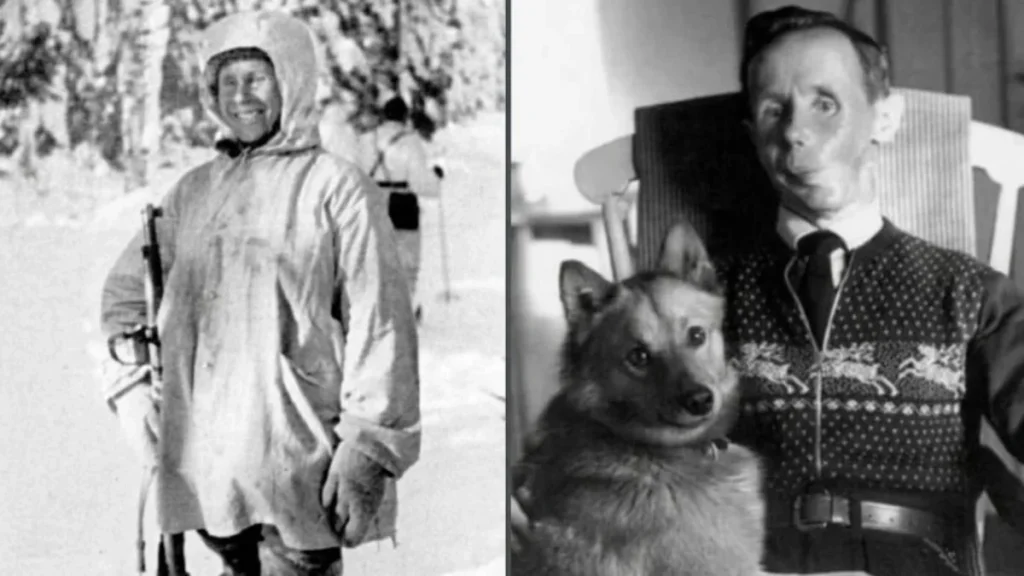
Häyhä joined the Finnish forces defending their homeland. His exceptional marksmanship soon made him one of the most dangerous snipers on the battlefield. Soviet soldiers gave him a chilling nickname: White Death.
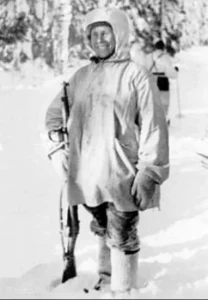
He operated in the Kollaa River area, where Finnish troops faced significantly superior Soviet forces. The snow-covered forests provided excellent cover. Häyhä used the landscape to disappear from enemy sight and strike without warning.
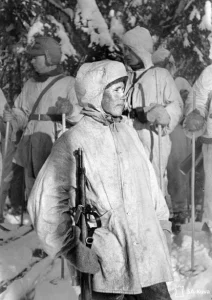
Why Soviet soldiers had trouble finding the White Death
Unlike many experienced snipers, Häyhä refused to use a telescopic sight. He preferred the regular iron sights on his Mosin-Nagant rifle. He believed the sights could reflect sunlight and give away his location. This also forced him to keep his head above the snow.
His winter camouflage further hampered detection. He covered himself in snow and carefully prepared his firing positions. Häyhä also put snow in his mouth to reduce the visible impact of his breath in subzero temperatures. Before firing, he packed snow in front of his rifle to prevent the muzzle flash from creating a cloud of gunpowder.
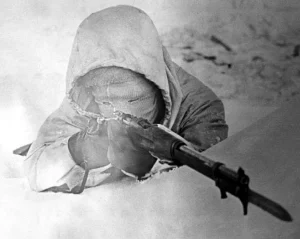
His effectiveness became a serious problem for the Soviet troops. They organized counter-sniper squads and reportedly fired at suspected hiding places. Nevertheless, Häyhä continued to operate in the forests.
According to available data, he killed approximately 500 enemy soldiers in approximately 100 days of fighting. Some historical sources cite 505 confirmed sniper kills, while others cite a higher figure.
On March 6, 1940, during combat, a bullet struck Häyhä in the face. The wound severely damaged his jaw and nearly cost him his life. Finnish soldiers carried him from the battlefield, and after extensive treatment, he ultimately survived.
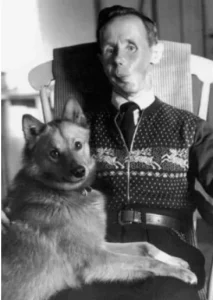
The Winter War ended on March 13, 1940. Häyhä never returned to the front. After recovering, he returned to civilian life, breeding dogs and hunting.
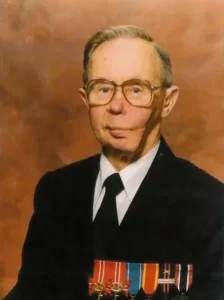
Simo Häyhä died on April 1, 2002, at the age of 96. After the war, he returned to civilian life and spent many years hunting, farming and raising dogs. Despite his extraordinary military record, he remained a modest and quiet man.
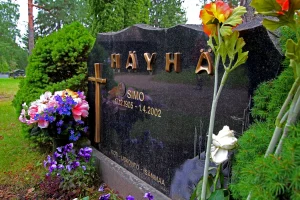
He rarely spoke publicly about his wartime experiences. His name, however, became legendary, and his achievements continue to fascinate military historians and shooting enthusiasts.
History is full of extraordinary stories that continue to enchant generations. Some reveal forgotten events, while others raise questions that have remained unanswered for decades. These remarkable chapters remind us how much of the past still awaits study and understanding.
Learn more: Simo Häyhä – Wikipedia.
We previously wrote about another interesting historical incident on the Yangtze River in 1949. Back then, a ship’s cat named Simon survived an artillery barrage, saved the ship’s food supplies, and became the only cat to receive a medal for bravery.