Discovered: Tatooine-Like Planet HD 143811 AB b Orbits Two Stars with a 300-Year Cycle
Astronomers have identified a rare exoplanet named HD 143811 AB b that circles a pair of stars, evoking the iconic double-sunrise scenes from the planet Tatooine in Star Wars. This circumbinary planet is one of the few directly imaged worlds orbiting binary stars. The findings were published in The Astrophysical Journal Letters.
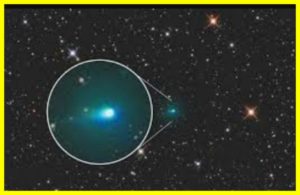
The discovery came from re-examining archival data collected in 2016 by the Gemini South observatory in Chile. Initially overlooked, the object has now been confirmed as a massive gas giant located about 446 light-years away in the Scorpius-Centaurus stellar association.
A Remarkably Young World
At an estimated age of just 13–15 million years, HD 143811 AB b is extremely young by cosmic standards. For context, Earth is approximately 4.6 billion years old, and non-avian dinosaurs went extinct around 66 million years ago — meaning this planet formed roughly 50 million years after that event.
Unusual Orbit in a Binary System
The planet orbits the closely paired stars HD 143811 A and HD 143811 B, which complete a mutual revolution in only 18 Earth days.
Despite this tight stellar duo, HD 143811 AB b follows a wide orbit that takes about 300–320 years to complete — yet it lies six times closer to its stars than other known directly imaged circumbinary planets.
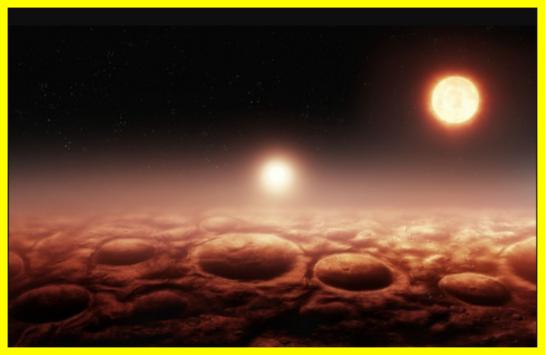
If you could stand on its surface, you would witness two suns rising and setting in the sky — a true Tatooine experience.
Why This Discovery Matters
Among more than 6,000 confirmed exoplanets, only a small fraction are circumbinary, and even fewer have been directly photographed.
HD 143811 AB b, roughly six times more massive than Jupiter, challenges current models of planet formation: how did such a large world emerge on a relatively close but extended orbit around a tight binary pair?
This finding sheds new light on how gas giants form and evolve in complex stellar environments.
The research was led by teams from Northwestern University and other institutions, utilizing data from the Gemini Planet Imager (GPI) and complementary observations.