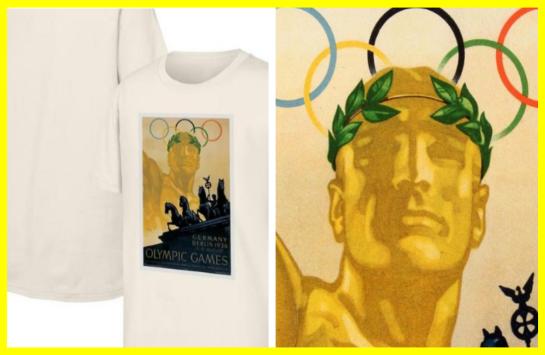
IOC Faces Backlash Over Sale of T-Shirts Featuring 1936 Berlin Olympics Design from Nazi Era
The official International Olympic Committee online store sparked widespread controversy by offering T-shirts that reproduce the original poster from the 1936 Berlin Olympics.
Held during Adolf Hitler’s Nazi regime, those Games are widely regarded as a major propaganda tool. The limited-edition items sold out completely, yet the debate continues.
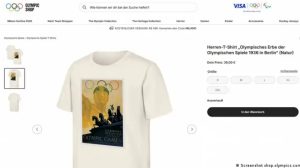
What Was Printed on the Controversial T-Shirts?
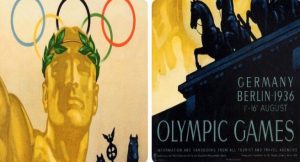
The design faithfully recreates the iconic poster created by artist Franz Würbel for the 1936 Summer Olympics in Berlin.
It shows a classical figure wearing a laurel wreath, the Olympic rings overhead, the Brandenburg Gate quadriga, and the text “Germany, Berlin 1936, Olympic Games.” The item was part of the Olympic Heritage Collection, a series celebrating designs from every modern Olympic Games.
Historical Context: Why the 1936 Olympics Remain Controversial
The Berlin 1936 Olympic Games served as a centerpiece of Nazi propaganda. Hitler’s government used the event to project an image of a peaceful and prosperous Germany, temporarily hiding anti-Semitic policies, concentration camps, and preparations for war.
Propaganda minister Joseph Goebbels oversaw the organization, while signs of persecution were removed from Berlin streets. The Games are also remembered for African-American athlete Jesse Owens winning four gold medals, directly challenging Nazi claims of Aryan superiority.
VIDEO. Jesse Owens, Two Jewish Sprinters, and the 1936 Olympic Controversy.
Public Outrage in Germany and Beyond
In Germany, the sale provoked strong criticism. Politicians, including members of Berlin’s Green Party, called it unacceptable without proper historical context or explanations.
Many argued the design risks evoking nostalgia for an era tied to Nazi ideology, and some demanded the items be withdrawn entirely.
The IOC’s Response
The International Olympic Committee (IOC) defended the collection, describing it as a celebration of “Olympic heritage” that honors designs from all Games.
While acknowledging the “complex history” of 1936, officials maintained that the limited run does not glorify Nazism. By the time the story broke, the T-shirts were already marked as sold out.
This incident highlights ongoing sensitivities around historical memory, especially regarding the Nazi period.
The 1936 Berlin Olympics T-shirt controversy underscores the delicate balance between preserving Olympic history and avoiding unintended glorification of a dark chapter.
Source: BBC — IOC criticised for selling Nazi-era Olympics T-shirt