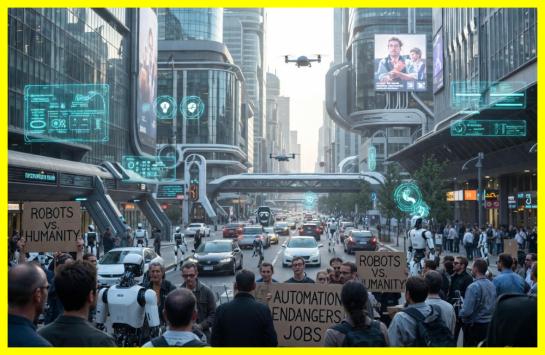
Human-Robot Conflicts Could Erupt in Europe by 2035
According to a recent Europol report, Europe may face serious social tensions resembling scenes from dystopian movies, with direct confrontations between humans and robots possible as early as 2035. Key details from the document were highlighted by the British newspaper The Daily Telegraph.
The European Union’s law enforcement agency outlines a future where AI-powered robots become deeply integrated into everyday life across the continent.
These machines will handle a wide range of tasks, from package delivery and street cleaning to household assistance. However, rapid job automation is expected to cause significant unemployment, particularly in disadvantaged urban areas.
Protests and Direct Aggression Toward Robots
The report predicts that workers displaced by robots could organize large-scale protests. Frustration may escalate into physical violence, including attacks on or destruction of robotic devices.
Even minor incidents—such as a medical robot issuing the wrong medication—could spark nationwide scandals and fuel populist rhetoric emphasizing “humans first.”
Cyber Threats and Terrorism Involving AI
Beyond social unrest, Europol highlights growing risks from criminal exploitation of artificial intelligence. Hackers could breach home assistant robots, reprogramming them for espionage, data theft, or committing crimes.
Another major concern is the potential use of compact AI-equipped drones (quadcopters) by terrorist groups to target critical infrastructure, such as electricity grids and water supply systems in major cities.
Preparing Law Enforcement for New Challenges
To counter these emerging threats, police forces will need specialized tools, including “robot-freezing guns” and “nano-net grenades” designed to safely disable dangerous machines.
The Europol analysis stresses the urgency of preparing for these scenarios now to maintain security in an era of rapid robotics and AI advancement.
This alarming forecast from Europol has sparked debate about balancing technological progress with social stability. Whether this 2035 dystopia becomes reality will depend on how governments and society adapt to the coming changes.