Ancient Solar Eclipse of 709 BCE in China: How It Revealed Earth’s Faster Rotation in the Past
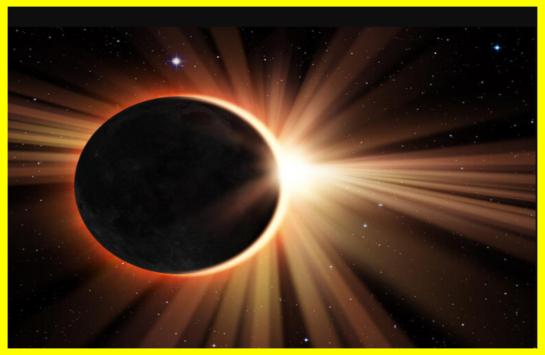
A remarkable total solar eclipse observed and recorded in ancient China nearly 2,700 years ago has provided modern scientists with a rare window into Earth’s rotational history.
An international team of researchers recently re-examined the earliest reliably dated record of a total solar eclipse, leading to a more accurate understanding of how fast our planet spun in the 8th century BCE.
The findings, published in the prestigious The Astrophysical Journal Letters, resolve long-standing discrepancies in astronomical models by incorporating precise archaeological data.
The Challenge with Earlier Calculations
The ancient Chinese chronicle from the state of Lu (modern Shandong province) describes a total solar eclipse on a specific date in 709 BCE, viewed from the city of Qufu — the birthplace of Confucius.
For decades, modern simulations suggested a mismatch: the path of totality should not have passed directly over that location according to previous models.
Researchers realized the issue was not in the astronomy itself, but in the geography. Earlier studies had relied on inaccurate coordinates for ancient Qufu, off by roughly 8 kilometers.
By using updated archaeological evidence to pinpoint the exact historical site, the recalculated eclipse path aligned perfectly with the recorded observation.
Understanding ΔT and Earth’s Changing Rotation
This coordinate correction proved crucial for refining the ΔT (Delta T) parameter — the difference between Earth’s irregular rotation-based time and uniform atomic time.
Accurate ΔT values are essential for reconstructing ancient astronomical events, including both solar and lunar eclipses. The new analysis confirms that Earth rotated slightly faster in the 8th century BCE than it does today.
This gradual slowdown is caused by tidal friction: the gravitational pull of the Moon on Earth’s oceans creates torque that very slowly brakes the planet’s spin, lengthening the day by about 2.3 milliseconds per century.
VIDEO. What Can a Total Solar Eclipse Tell Us About the Sun? ☀️ | Space’s Deepest Secrets.
The Enduring Value of Ancient Chinese Astronomical Records
Ancient Chinese astronomers meticulously documented celestial events, viewing them as omens for rulers. This tradition has left us with one of the world’s most comprehensive catalogs of solar eclipses spanning millennia.
These records continue to yield scientific insights when combined with modern computational methods and archaeological findings.
By integrating historical texts, excavation data, and advanced modeling, scientists can now reconstruct the evolution of Earth’s rotation and solar activity with remarkable precision. Similar approaches have already helped verify dates of major historical events worldwide.
Key Takeaways from the Study
The authors emphasize that even a single corrected ancient observation can significantly improve our models of planetary and solar system dynamics.
This interdisciplinary work — blending astronomy, archaeology, and history — demonstrates how records from thousands of years ago still drive cutting-edge discoveries today.
Ultimately, this research highlights the timeless importance of careful skywatching and record-keeping, showing that the past continues to illuminate our understanding of the cosmos.