Bird extinction is one of the most alarming environmental issues of the 21st century
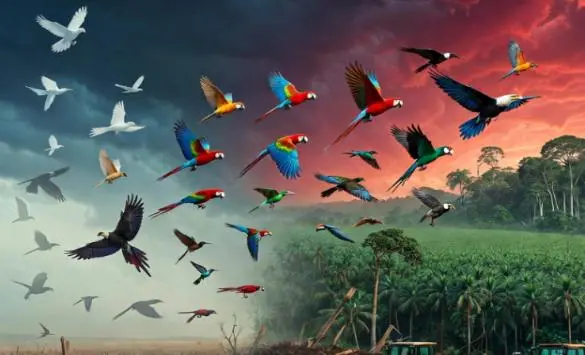
New research has come to light that shows that the world is at risk of losing 517 bird species in the next 100 years.
These are not isolated incidents but a truly massive process of bird extinction, already underway and significantly exceeding historical rates.
According to a study published in the journal Nature Ecology & Evolution, if current threats persist, 5.2% of the nearly 10,000 bird species studied could become extinct by 2125.
By comparison, since 1500, bird extinction events have been recorded at a third of the rate. The rate of bird extinction has increased dramatically and has surpassed the natural norm.
Even if humanity immediately stops the main factors—habitat destruction, poaching, and climate change—about 250 species will still be doomed.
The reason is their extremely small populations and extremely limited habitats. Today, 11.5% of all bird species are threatened (according to the IUCN Red List 2025-2 update). Moreover, 61% of populations are showing a steady decline—an increase of 17 percentage points since 2016.
Why is bird extinction accelerating?
The main killer is not the climate itself, but the loss of bird habitat. Agricultural expansion, deforestation, and urbanization are destroying nesting, feeding, and migratory habitats.
Scientists estimate that agricultural expansion and intensive farming affect up to 80% of threatened species.
The crisis is particularly severe in the tropics and on islands. Here, ecosystems are extremely sensitive: even small changes in temperature and humidity can have catastrophic consequences.
New data show that extreme heat (caused by climate change) has reduced tropical bird populations by 25–38% compared to what they would have been without global warming.
Examples of Endangered Species and the Impact on Ecosystems. Among the most vulnerable are Madagascar endemics (such as Schlegel’s asity), Hawaiian honeycreepers, the northern bald ibis, and the sulcata-crested cockatoo. Many species have already moved into higher risk categories.
Bird extinction will impact more than just biodiversity. Birds perform critical functions such as pollination, seed dispersal, and insect pest control.
The extinction of 517 species will lead to a loss of more than 3% of global bird diversity—large and highly specialized species will be particularly affected.
What can be done: from threats to real salvation
The Nature Ecology & Evolution study highlights an important conclusion: simply reducing threats is not enough. We need targeted population restoration.
Also, the creation of nature reserves, the fight against invasive species, captive breeding programs, and reintroduction programs.
The threat of bird extinction is not a future threat but a present one. If we don’t change our approach today, future generations will see a much emptier sky.
Previously, global experts warned of another problem. According to their data, population growth could destroy the Earth in the future. Experts predict that by 2070, the planet’s population will reach 11.7–12.4 billion people.